In a nutshell
Despite having one of the highest food waste recycling participation rates in England (the South West as a whole is at 74%), Devon still had a persistent group of households who weren't engaging with the service. Years of campaigns and service improvements had captured the ‘easy wins’, leaving behind households with more entrenched habits and barriers that were proving increasingly difficult to influence.
Funded by the Devon Authorities Strategic Waste Committee (DASWC) and delivered in partnership with WRAP, we worked with councils across Devon to develop and test a new approach to increasing participation. Through a pilot in Teignbridge, we combined behavioural science, targeted household monitoring, and bold, disruptive interventions to engage persistent non-participants. The approach increased food waste recycling participation by up to 43% and is now informing wider rollout across Devon.
Insight
Our previous work on recycling has identified three particularly influential and interlinked factors that shape recycling behaviour: ease, knowledge and motivation. We use this framework across our recycling projects to understand the barriers that may prevent people from participating and identify where interventions can have the greatest impact. These conditions are interdependent: if any one is missing, it can undermine the others. For example, someone may be motivated to recycle and know how to do it, but if the behaviour feels too difficult or inconvenient, they may still not act.
For this project, we commissioned new qualitative research to understand the specific barriers Teignbridge residents faced when recycling food waste, and mapped these findings against our established framework.
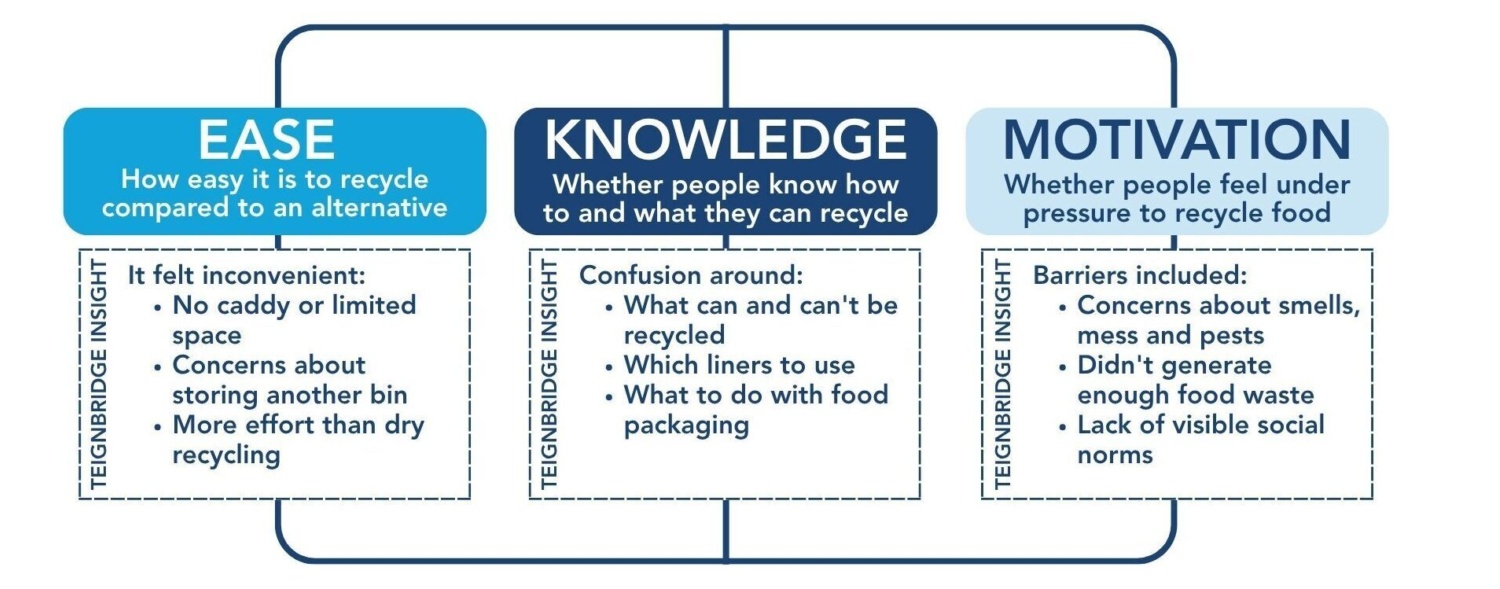
Working alongside Devon partners, we used these insights to co-create a wide range of intervention ideas using behavioural tools before prioritising the most promising concepts for testing.
Intervention and implementation
A targeted model for persistent non-participants
Council communications typically rely on residents choosing to engage with letters, leaflets or campaigns. However, non-participants in Teignbridge had already resisted years of engagement activity. We therefore developed a targeted intervention model designed to identify persistent non-participants and deliver increasingly bold interventions directly to those households:
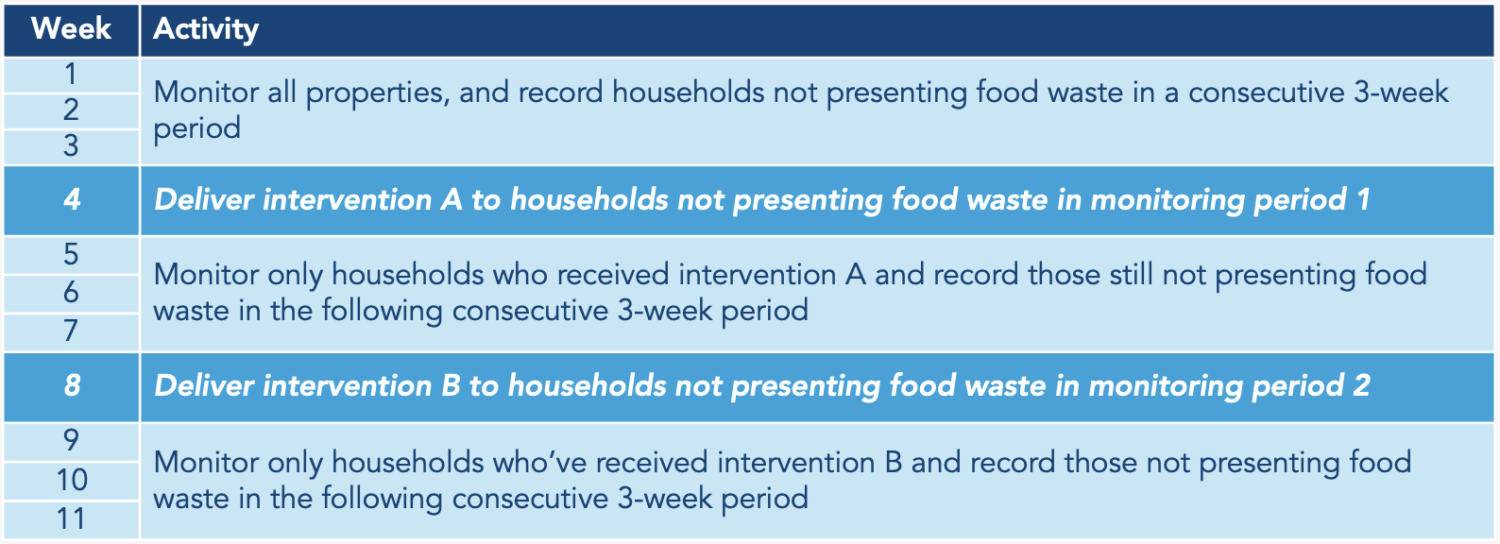
This approach created a feedback mechanism: by repeatedly identifying and re-targeting households, it made it clear that food waste recycling behaviour was visible rather than anonymous. It also enabled resources to be focused on households with the greatest opportunity for improvement, while providing robust household-level evaluation.
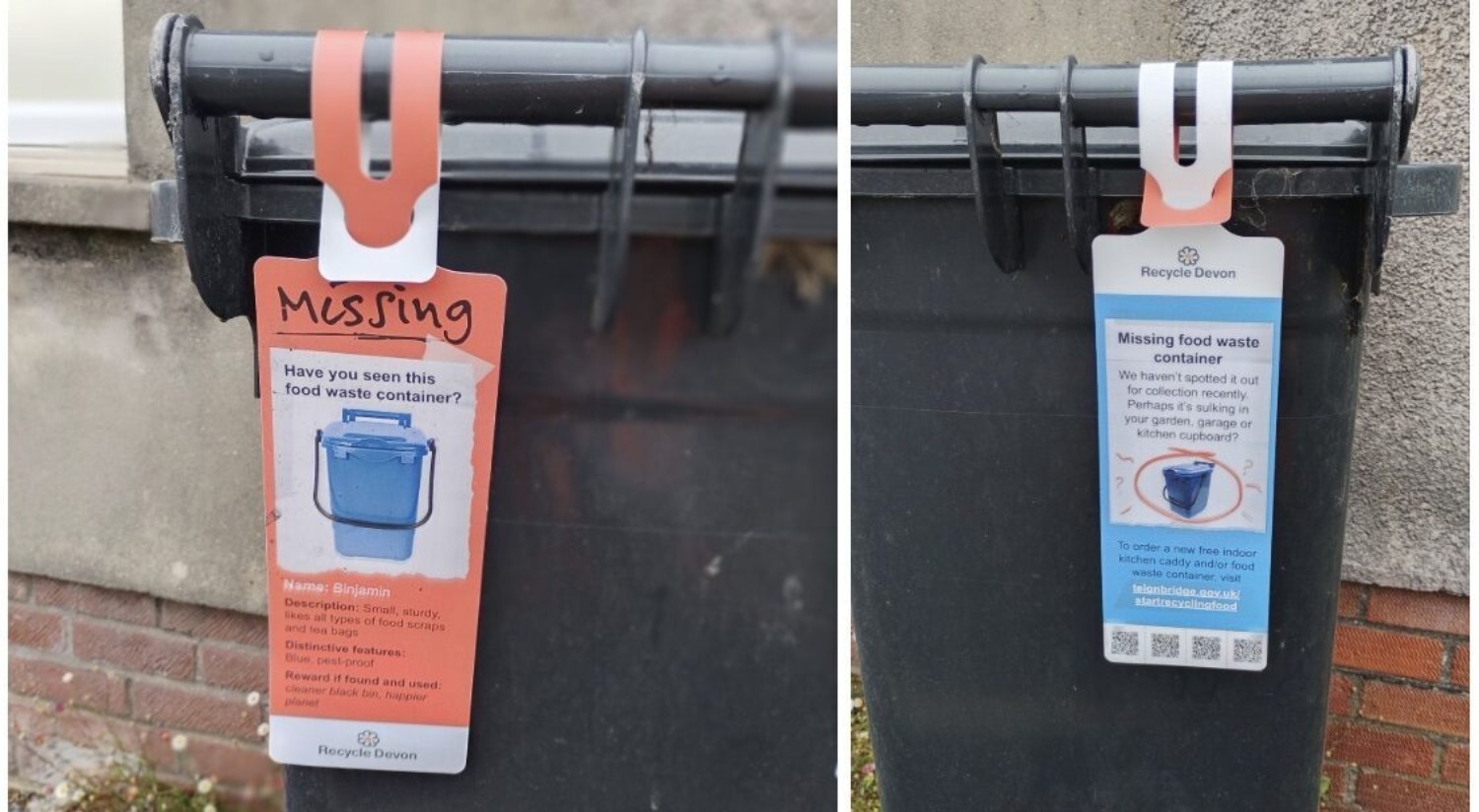
Intervention A: ‘Missing Caddy’ bin tag (delivered to all non-participating households)
A playful wheelie bin hanger styled like a homemade 'missing cat' poster. Designed to spark curiosity and humour, it encouraged residents to think differently about their missing food waste caddy while drawing attention to the service in a way traditional council communications rarely do.
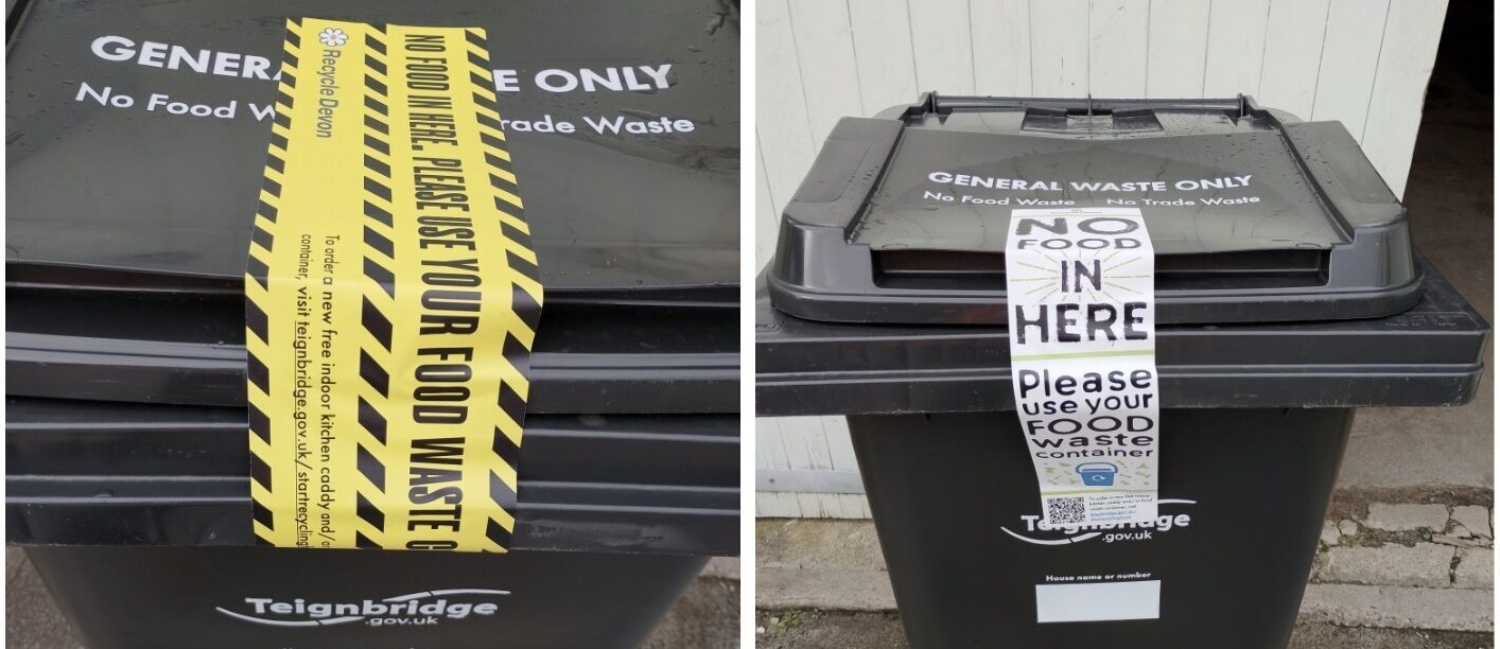
Intervention B: ‘Blocking the Bin’ sticker (delivered to households still not participating after intervention A)
A large sticker placed across the lid of residents’ residual wheelie bins, preventing them from being opened without first removing the message. By interrupting an automatic routine at exactly the moment waste decisions were being made, the intervention became impossible to ignore.
To overcome caddy cost barriers, households receiving either intervention were also offered the opportunity to order a free indoor and/or outdoor caddy.
Impact
The pilot successfully increased food waste recycling participation among households that had consistently failed to present a food waste caddy despite having access to the service.
Following the 'Missing Caddy' intervention, 22% of targeted households put out a food waste caddy. A further 30% of households who received the subsequent 'Blocking the Bin' intervention also put out a caddy for collection following intervention.
Overall, 43% of households identified as persistent non-participants began presenting food waste for collection after receiving one or both interventions – equivalent to 314 newly participating households. This represents an unprecedented level of behaviour change among persistent non-participants, demonstrating that bold, targeted interventions can unlock significant increases in participation even among households that have resisted previous efforts to engage them. The interventions also generated 93 new food waste caddy orders, helping residents overcome practical barriers to recycling.
Following the success of the pilot, DASWC are now funding the rollout of the interventions more widely across Devon, enabling other authorities to benefit from the learning generated in Teignbridge. The work has also informed Devon's rollout of an innovative smart watch-based monitoring system, enabling operational staff to capture household-level participation data at the point of collection. Together, these developments provide a scalable model for identifying non-participants, targeting interventions where they are most needed and continuously improving food waste recycling participation.