
We tend to think of friction as something to eliminate. In product design, customer experience, and even everyday life, “make it seamless” seems to always be the overarching aim. But not all friction is bad. In fact, the right kind of friction can stop us from making stupid mistakes and help us stick to the habits we actually want.
The real question shouldn’t always be “How do we remove friction?”
It might be “Where should friction exist, and why?”
The case for good friction
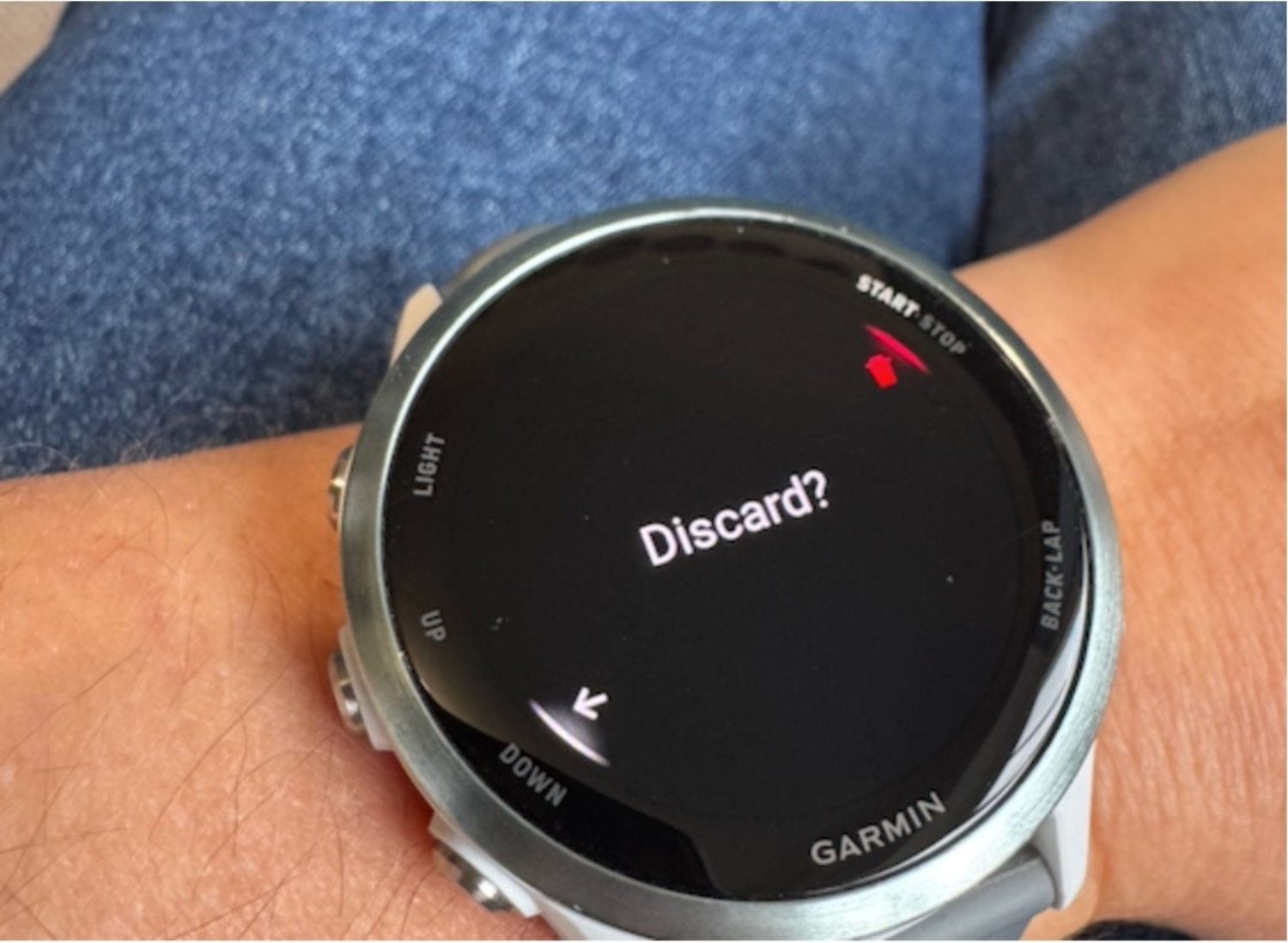
At the end of a 5k race one evening this week, I experienced “good friction”. Picture this, I’ve just crossed the finish line, sweaty, tired, trying to catch my breath (read as ‘trying not to die’), and I’m tapping through my Garmin watch to save the activity. Suddenly, a prompt appears asking if I’m sure I want to discard the run.
That tiny moment of friction saved me. It slowed me down just enough to prevent a mistake. One accidental tap could have erased the effort, but the confirmation step acted as a safeguard. I’m glad to say it is now on Strava, and therefore it did happen (IYKYK).
This is good friction: intentional, minimal, and protective. It respects my goals and helps me avoid regret.
Good friction often shows up in moments where the cost of error is high, decisions are irreversible or where users are likely to act on autopilot. It’s not there to block you, it’s there to support you.
When friction turns toxic
In contrast, today I tried to unsubscribe from a service. Once I eventually found the “Cancel subscription” link buried in the website, I was then in a maze of multiple confirmation pages, emotional prompts (“Are you sure you want to lose x,y,z benefits?”) and confusing language to complete my action. And I’m sure we have all experienced those companies that go as far as to require a call to customer support to end your subscription.
As with saving my run, this is also friction, but of a very different kind.
This is bad friction: manipulative, excessive, and self-serving. It’s designed not to help me, but to wear me down. Instead of supporting my intent, it exploits my inertia.
Companies do it because it works, at least in the short term. People give up. Subscriptions linger. Their metrics look good. But over time, this kind of friction erodes trust. It creates frustration, damages brand perception, and increases the likelihood that customers leave for good (and tell others why).
Friction as behavioural design
When applied thoughtfully, friction can be reframed as a behavioural tool. Every extra step, every pause, every prompt shapes what people do next. That means companies aren’t just designing interfaces, they’re designing behaviour. By removing friction, you make actions easier and more likely; by adding it, you slow actions down or discourage them. As such, the power lies in where you apply it.
Behavioural science gives us a useful lens here:
- People tend to follow the path of least resistance
- Small barriers can significantly reduce action
- Well-timed prompts can interrupt automatic behaviour
I’ve noticed more and more companies using friction as a deliberate tool for user wellbeing, rather than just a lever. Like the "discard" prompt on my Garmin that stopped me from accidentally deleting a half hour of pure hell, it’s also showing up in more subtle ways, like how my banking app asks how I got hold of someone's bank details before I can make a transfer, prompting me to think if I could be caught up in a fraudulent transaction.
It’s about making the "bad" behaviours just a little bit harder to fall into. Maybe that’s by burying the "push all notifications" toggle so we actually have to think about what we’re opting into, or making the "good" stuff like setting up a pension feel totally frictionless. It’s not about blocking or restricting a behaviour, but instead about making the decision more conscious and aligning the goals with the person actually using the product.
Share
RELATED ARTICLES
Sustainability

Houmous for breakfast?
How small, inconvenient changes in sustainability are subtly shaping new norms
21/03/25
Read moreBehavioural science
The psychology of switching energy suppliers: what holds us back?
With the rise of the Energy Price Cap, Polly looks at the psychology behind switching energy suppliers
06/03/25
Read moreOpinion

Nudging a running injury away
Polly tries out some behaviour change tactics to help her recover from a running injury
25/07/24
Read more