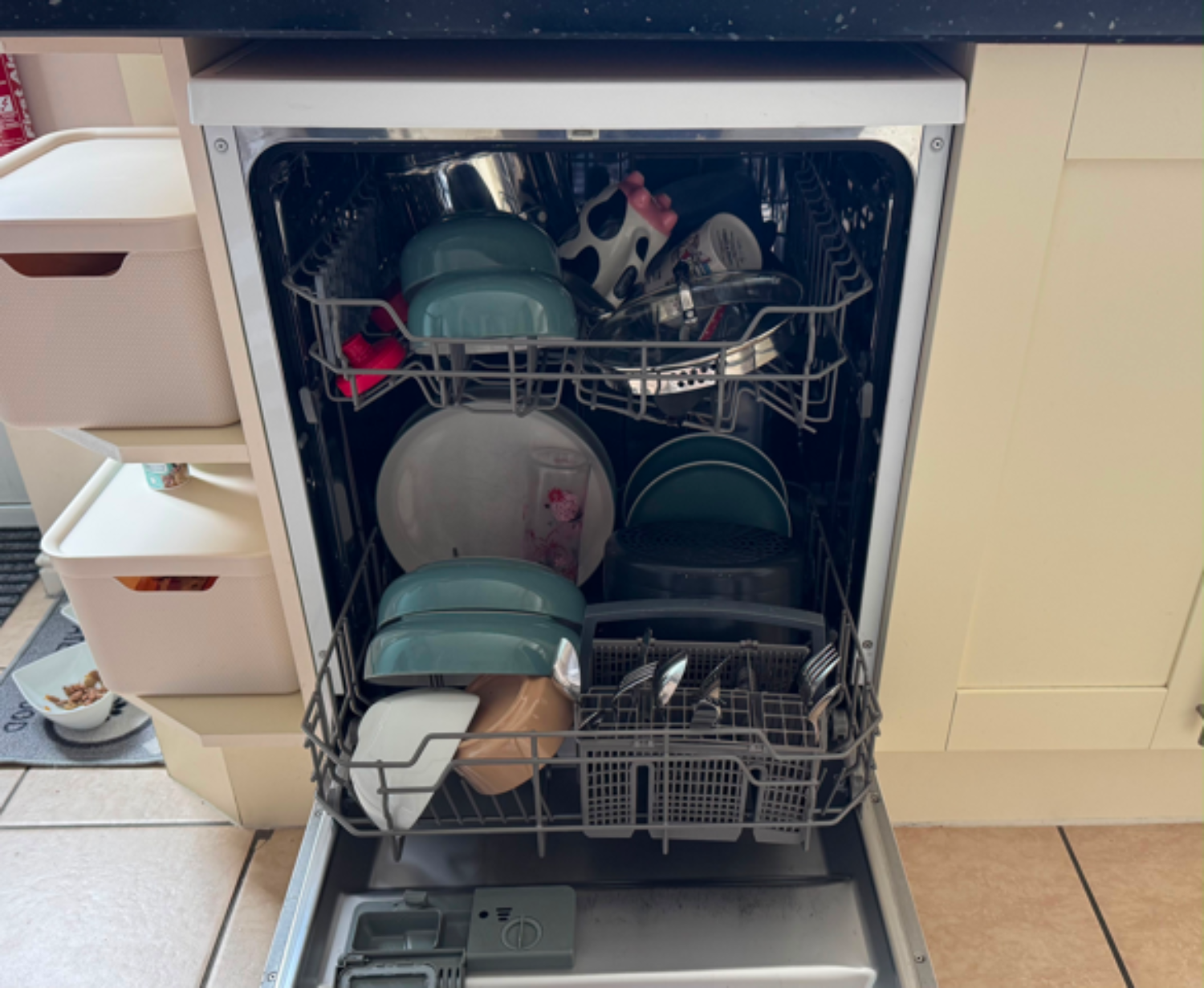
Is there more than one way to load a dishwasher?

Polly Knight Head of Projects
27/07/26
3 mins
Share
Every year at Behaviour Change we hold a summer “away day”. It’s a chance to get out of the office and spend some quality time together as a team (I’m avoiding the dreaded “team building” wording). As part of the day, we were asked to prepare a five-minute contribution on something we’d learned in the last year that was, in some way, relevant to our work.
I honestly drew a complete blank. Not because I didn’t think I’d learnt anything all year, but because I struggled to identify one profound lesson that felt worthy of sharing. So instead, I thought about the challenges I’d faced over the past year and what they’d taught me.
I’ve been at Behaviour Change for five years now. We spend our days helping organisations understand people and create change. It’s easy to think that behaviour change is all about influencing other people.
Looking back, I’ve spent much of this year learning to adapt. After four years of living on my own with the kids, I met a lovely partner, and it turns out living with another adult again isn’t just about finding space in the wardrobe. It’s discovering that they load the dishwasher differently, fold towels differently, organise cupboards differently…
Naturally, my first instinct was to explain the correct way to do all of those things.
But I’ve learnt something that’s been surprisingly difficult to accept: Different doesn’t mean wrong. It turns out there are often several perfectly good ways to reach the same outcome – who knew!
Not surprisingly, it’s something we talk about all the time at Behaviour Change. If you want someone to change, telling them they’re wrong is rarely the answer. Understanding why they do what they do, and being open to a different perspective, is far more powerful.
It turns out I needed to take some of our own advice.
I’ve been learning a similar lesson with my kids. At 16 and 13, they’re getting to an age where they genuinely know more than I do about certain things. And they certainly have differing, often valid, opinions on things (it’s really not easy to admit that!).
My role is changing. It’s become less about having all the answers and more about helping them ask the right questions, make good decisions and build confidence.
And again, that’s not so different from work. None of us is expected to know everything. Our job is to bring together people with different expertise, perspectives and ways of working, and help them move towards a shared goal. The best outcomes rarely come from one person having all the answers. They come from listening, adapting and creating an environment where everyone can contribute.
Looking back over this year, I don’t think the biggest lesson has been that life changes. I already knew that. The lesson has been recognising when I need to change, and that the hardest behaviour to change is often your own.
Whether it’s learning to live with someone again, learning to let my children grow into independent adults, or working with people who see the world differently, the challenge is the same. I’ve had to accept that my way isn’t always the only way.
As Ted Lasso says in one of my favourite scenes, “Be curious, not judgmental.”
Looking back, I think that’s exactly what I’ve learnt this year. Real behaviour change often starts with changing your own behaviour first.
Although… I’m still fairly certain there’s only one correct way to load a dishwasher.
Share
RELATED ARTICLES
Behavioural science

From the Police to Behaviour Change
Anaïs reflects on the importance of considering habits when tackling behaviour change
16/10/25
Read moreBehavioural science

What my bangles taught me about changing behaviour
Honica reflects on the behavioural learnings from wearing her wedding bangles for 40 days
09/07/25
Read moreBehavioural science
These jeans were made for wearing
Tasha reflects on the behavioural biases she experienced on the journey to getting her jeans fixed
24/01/25
Read more