It’s a dirty business, but someone’s got to do it

David Hall Executive Director
02/03/26
4 minute read
Share
It's rare these days, in a world saturated by social media and streaming, that a television programme cuts through and shapes real-world debate. The Traitors is the recent fun example. But on more serious ground, Mr Bates vs The Post Office showed that drama can sometimes do what years of earnest efforts cannot, shifting public attention and accelerating change.
Now we may have another contender. Dirty Business, Channel 4’s powerful (and at times surprisingly funny) drama about sewage pollution, which aired last week, is already sparking strong reactions and 5-star reviews. Based on real stories, it follows the people who exposed the systematic dumping of sewage into England’s rivers and coastlines, and the long struggle to bring the issue into the public eye.
It’s reasonable to assume another wave of public anger towards the water industry is on its way. Ironically, this may come at the worst possible moment. At exactly the moment when expectations are rising, the room for easy answers is shrinking.
Like energy, water in the UK faces a genuine trilemma: protecting rivers and ecosystems, adapting to drought and climate pressures, and keeping bills affordable for customers - pressures that rarely align.
For most people, though, the picture looks simpler. We live in a rainy country. Water feels abundant. And it’s easy - not entirely unfairly - to see the problem as one of corporate failure rather than collective responsibility.
The gap between the complexity of the system and the simplicity of the public narrative is enormous.
I feel that gap quite personally. Last year, I spent five months leading a bid to Ofwat to develop the first ever national water efficiency campaign for England and Wales. The brief, in essence, was to encourage people to use less water in a context where many - understandably - believe this is not their problem to solve.
Our strategy aimed to do two things simultaneously. First, to make saving water feel positive, achievable and even enjoyable in everyday life. Second, to use the launch of a national campaign to lean in to a broader, more honest conversation - one led by trusted voices across civil society about why water efficiency really is everyone’s business.
We didn’t win the work.
And while that is always disappointing, the experience taught us something more interesting than who won or lost: it sharpened our understanding of the kinds of problems that resist simple solutions - and what it takes to work on them well.
Complex problems rarely produce tidy solutions
One of the hardest truths about behaviour change is that the most effective interventions are rarely neat. They can be partial, uncomfortable, and iterative. They rely on shifting norms rather than delivering instant compliance.
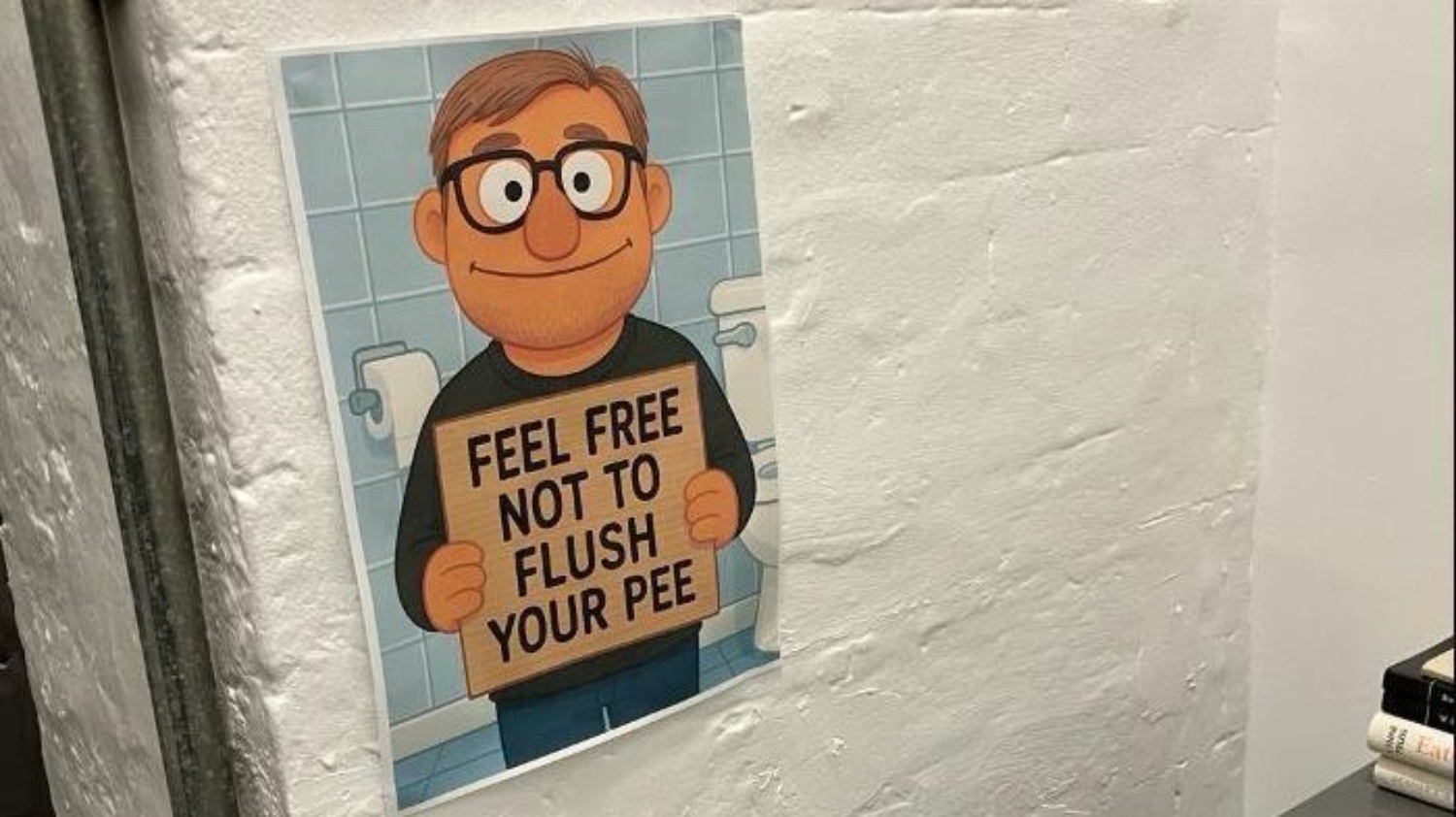
We saw this even in small ways. During the project, we put up a deliberately provocative poster in our own office toilet encouraging people not to flush after a wee. Did everyone stop flushing? Of course not. Did a few people, occasionally? Yes. Did people talk about it? Quite a lot. And, interestingly, many began trying the behaviour at home.
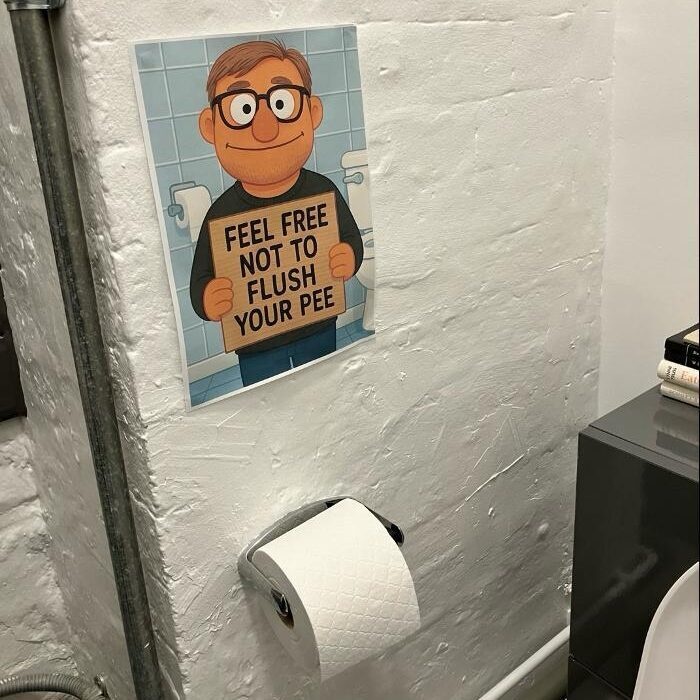
What changed wasn’t universal adoption - it was the boundaries of what felt discussable. The Overton window moved. A behaviour that had previously felt socially off-limits became something people could at least consider.
The pull of the lowest common denominator
Procurement and pitch processes - understandably - tend to reward clarity, confidence, and simplicity. They favour polished narratives and ideas that are easy to explain and easy to agree on.
But when problems are genuinely complex, this can create a risk: not bad ideas perhaps, but ones that risk being shallow. Solutions that look coherent and attractive, but struggle when they meet the messy reality of human behaviour, infrastructure, and competing incentives.
For us, part of that complexity came from the way we chose to work. Rather than building a single-agency solution, we brought together a coalition of organisations with different strengths, perspectives and lived experience of the issue. That collaboration made the thinking richer and more grounded - but it also meant embracing nuance, trade-offs and honest debate rather than presenting a single, perfectly polished narrative.
As a team, we learned how easily work that tries to hold multiple truths at once can feel over-complicated. And how collaborative, systems-led thinking can be harder to land than a singular, tidy answer.
But despite the outcome of our pitch, much of what we built still feels right to us.
We prioritised behavioural diagnosis over assumptions. We focused on a small number of meaningful behaviours rather than a long list of asks. We treated evaluation as a learning system, not just a reporting requirement. And we tried to hold together the reality that behaviour change is as much about making things easy as persuading people to act.
The experience clarified something important: not every process or context suits the way we work - and painful as it is, that’s OK.
The messy reality of behaviour change
As public attention on water intensifies - and programmes like Dirty Business further inflame the national mood - the temptation will be to reach for simple narratives and singular solutions.
But complex systems rarely respond well to simplicity alone.
The truth is that behaviour change is often a dirty business too - not because it is cynical, but because real change happens in the messy space between systems, stories and everyday habits.
So, if you are looking for quick, tidy answers that are easy to buy and offend no one, we may not be the right partner.
But if you are grappling with problems that resist simplification - where progress depends on collaboration, honesty and depth - that’s where we do our best work.
Share
RELATED ARTICLES
Sustainability

Houmous for breakfast?
How small, inconvenient changes in sustainability are subtly shaping new norms
21/03/25
Read moreBehavioural science
Let's refill like it's 1993
David shares what we can learn about circularity from his travelling around Africa in '93
10/04/24
Read moreOpinion

Where were you during the great vegetable war of 2023?
How 2024 might just be the year we cut food waste, plastic and start enjoying our carrots more too
13/01/24
Read more