Making recycling work for underserved communities

Honica Sharma-Jennings Client & Partnerships Lead
03/06/26
4 minute read
Share
Most of us recycle, but none of us are perfect at it. And for some, the system works against them to get it right. When we think of the ‘perfect recycler’, we might think of someone with a snazzy, multiple-compartment, integrated bin and a clockwork routine of taking their recycling out to a driveway of perfectly lined wheelie bins.
For a lot of people, that image feels very far away from who they are. 22% of people in the UK live in flats where they may have communal bins and little space to store multiple internal bins and a food caddy. Many live in HMOs where systems are shared and household dynamics play a big role in correctly recycling. ~20% of people live in poverty, managing a long list of competing priorities (and recycling is not always one of them).
Increasingly, councils are coming to us with a challenge to improve recycling in communities with the lowest recycling rates - often councils who already offer gold standard services, but where participation still remains low. Typically because recycling systems haven't been designed with underserved communities in mind.
From the work we’ve done in this space, there are three interconnecting pillars that shape our approach:
1. Build a system that reflects the realities of people’s everyday lives
The most fundamental principle from behavioural science is that if you want someone to do something, you have to make it easy. Any friction along the way decreases the likelihood that people will participate. And the more barriers someone is already navigating in their daily life, the less capacity they have to deal with that friction.
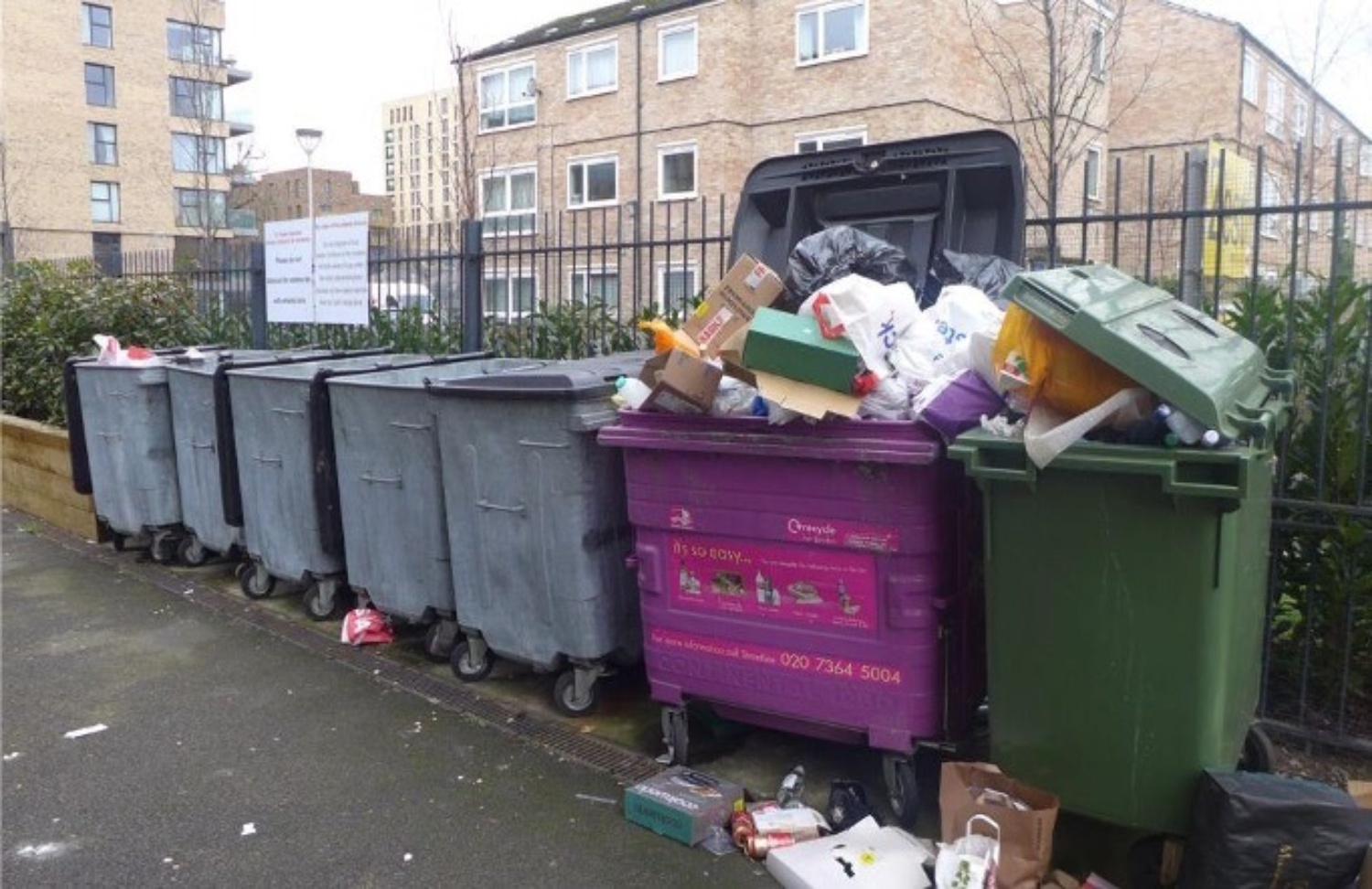
For many underserved communities, additional friction might look like recycling centres you need to travel to, overflowing or poorly maintained bins, requiring multiple bins to separate waste when you have limited space, or costly bulky waste collections. We need to enable recycling as close to people’s doorsteps as possible, and explore innovations that align with collection requirements while also working within the realities of people's homes, such as community skips or space-saving tools.
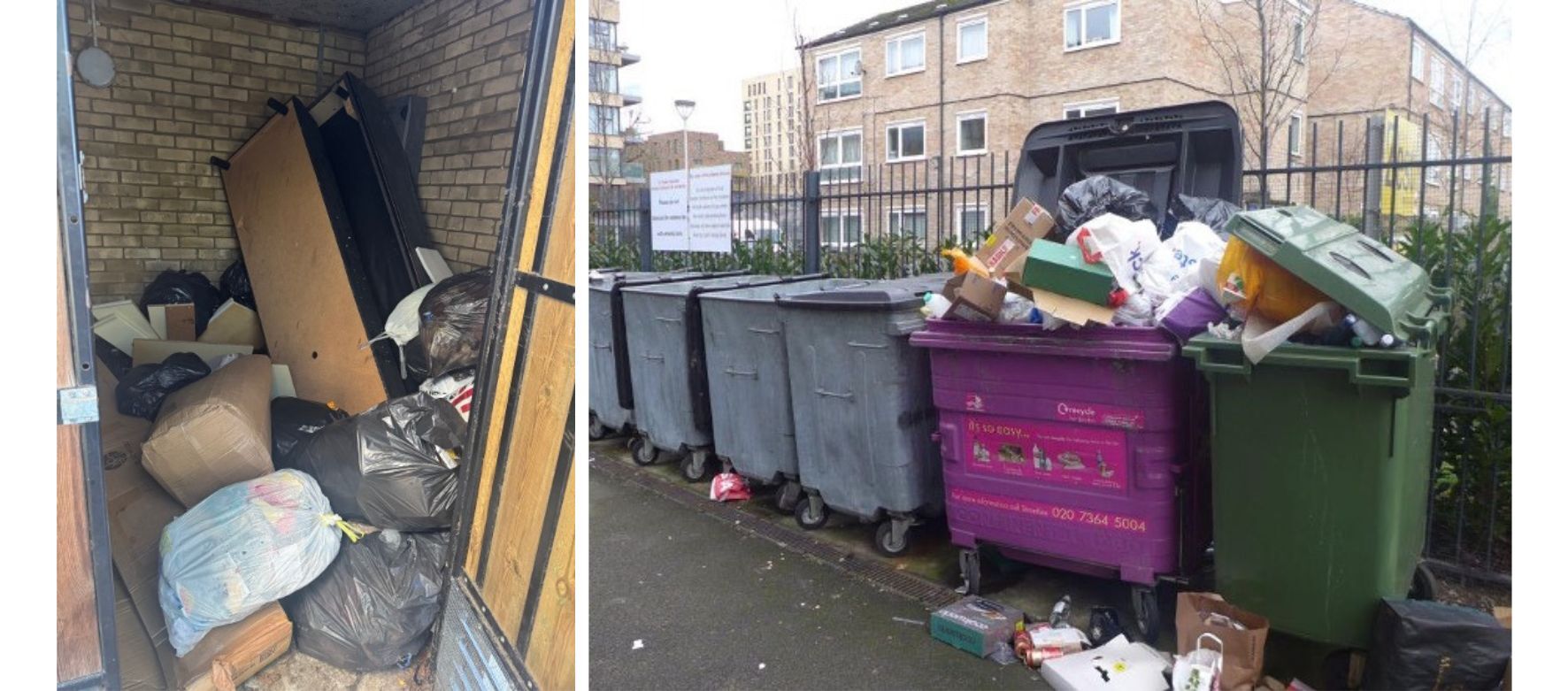
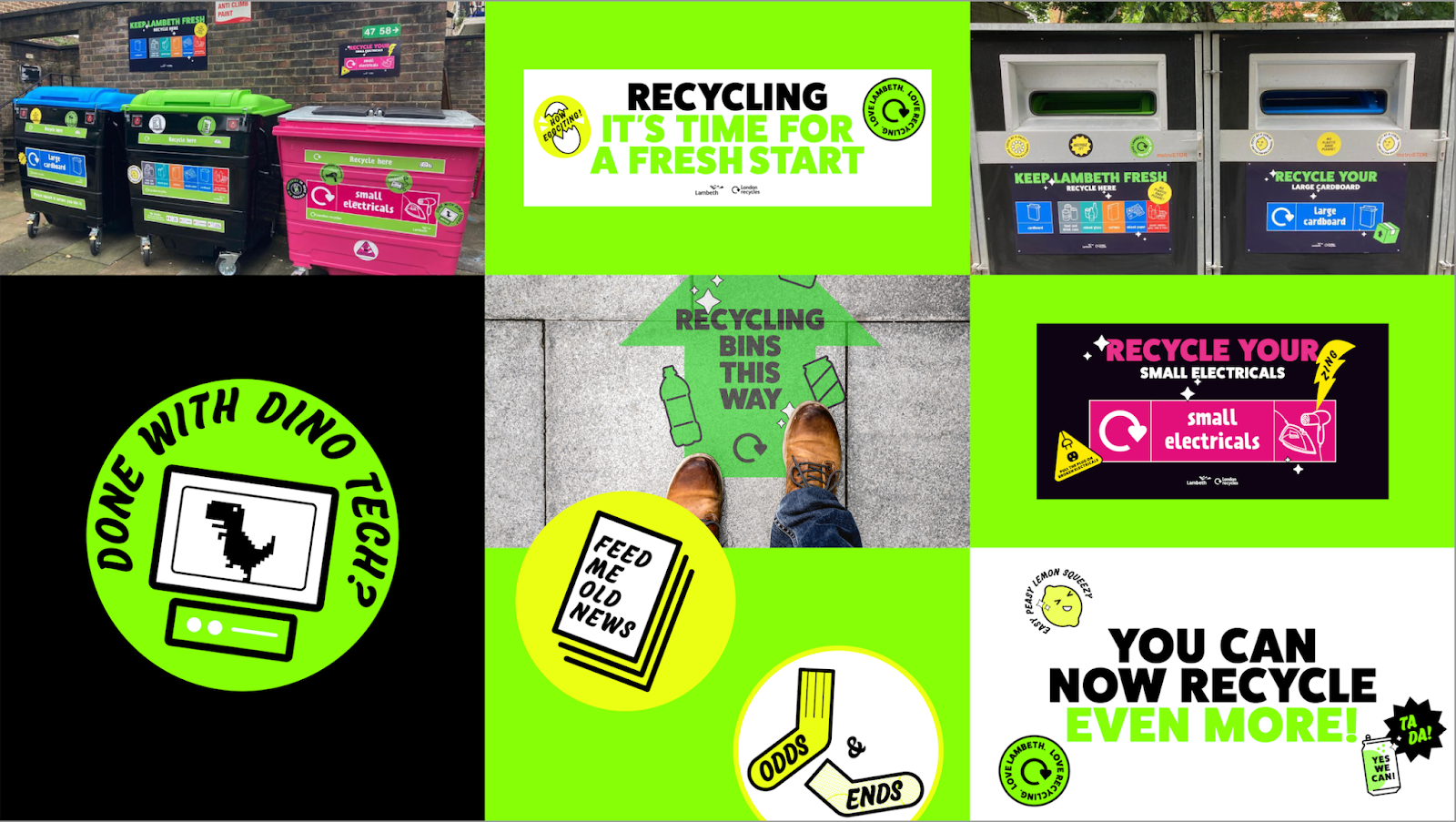
Our work with ReLondon and Lambeth Council on purpose-built flats is one of our strongest examples of what effective system change looks like - we designed interventions to reduce friction at every touchpoint and achieved an overall recycling increase of over 150% (full case study can be found here). We did so by making the service feel easy and motivating to use, replacing a system that had been putting residents off, and communicating the change in a simple, visual way that worked for everyone.
2. Communicate in a simple, helpful, and easy-to-understand way
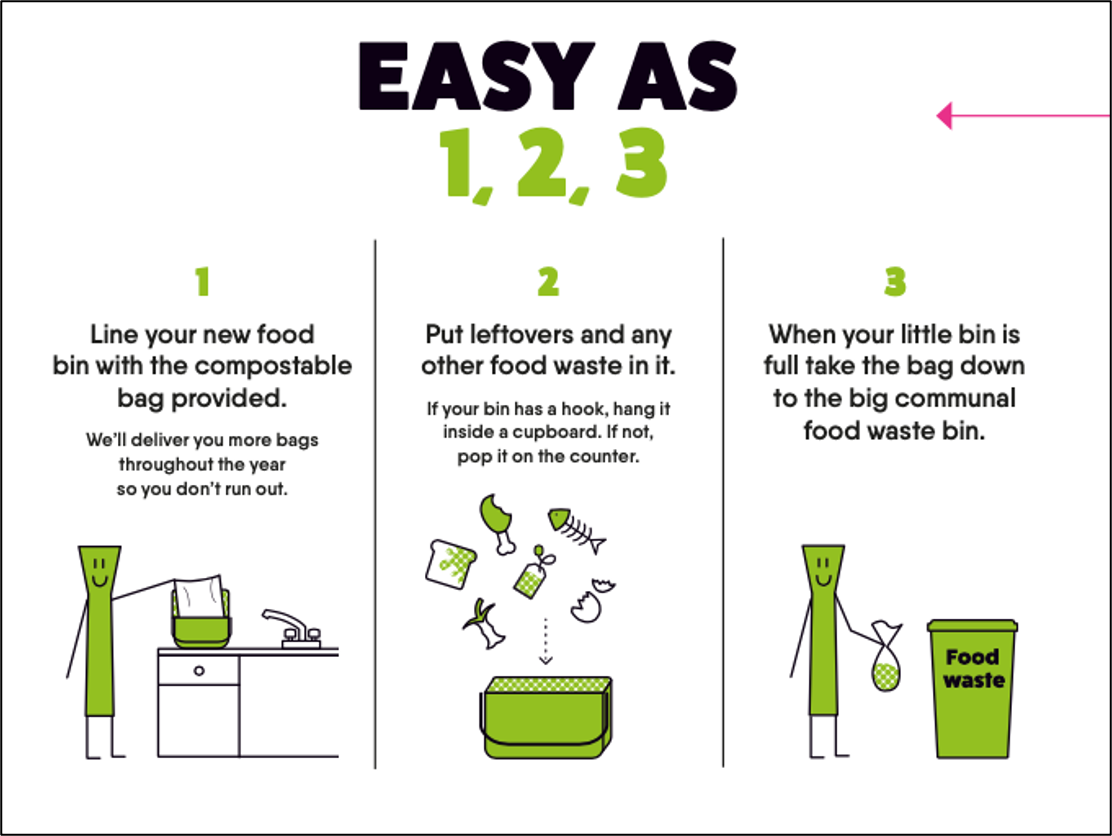
Which brings us to the next pillar - communication. We know people have limited attention and cognitive load, especially when stressed, time-poor, or managing competing demands. Recycling communications should reflect this by prioritising information that is simple, helpful, and easy for everyone to understand. That means designing for all levels of English proficiency, using as few words as possible and leading with visuals.
The example below is from our flats work. When introducing the new food waste system we chunked it into 3 steps, used really simple language and only included relevant information people needed to use the service:
For many underserved communities, something that looks official or clearly from the council isn't always received positively. Explore unexpected ways of communicating with residents with different delivery mechanisms or packaging that cuts through. From our work on debt management, where ignoring communications was a big issue, we found putting vibrant, unofficial-looking stickers on communications had a significant impact on whether people opened them at all. We're trialling the same principle in a food waste recycling participation pilot live right now, using bright green envelopes and stickers that feel inviting and personal rather than governmental.

3. Show people the council is on their side
The third pillar uses reciprocity, the concept that when someone does something for us, we feel motivated to give something back.
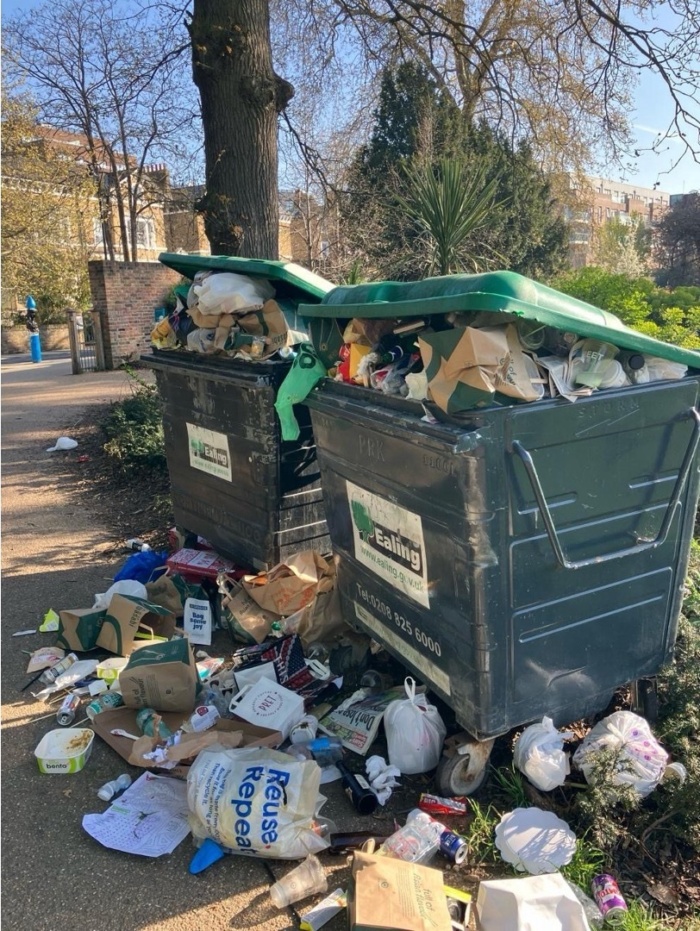
In many underserved communities, there's an accumulated sense of feeling overlooked and underinvested in. Overflowing bins, badly maintained communal areas, or fly tipping all contribute towards this, coupled with misinformation and a rising distrust in institutions. If people felt like their services were good, reliable, well-communicated and simple to use, this could have a wider effect on how people view their council (and how they participate in the service).
Reciprocity is one of the reasons the flats project worked so well and has shaped the strategies behind our work on reducing flytipping. When councils visibly invest in a community’s space, residents feel their council cares and are more likely to show up themselves.
__________________________________________________________________________________________________
To summarise our three pillars:
- Build a system that reflects the reality of people’s lives
- Communicate in a simple, helpful and easy-to-understand way
- Show people the council in on their side
These three all reinforce each other. A well-designed system requires good and simple communications. Great communications fall flat if the infrastructure doesn’t work. And both are undermined if residents feel underinvested in.
Share
RELATED ARTICLES
Sustainability
When is littering not littering?
The 5 types of littering behaviours
08/05/26
Read moreBehavioural science

Got the hang of your recycling? Think again.
With big changes coming to recycling, Rob lays down what's needed for them to succeed
01/07/25
Read moreSustainability
Wishcycled recently?
Our innovative intervention to tackle one of the biggest barriers to recycling correctly
25/06/25
Read more