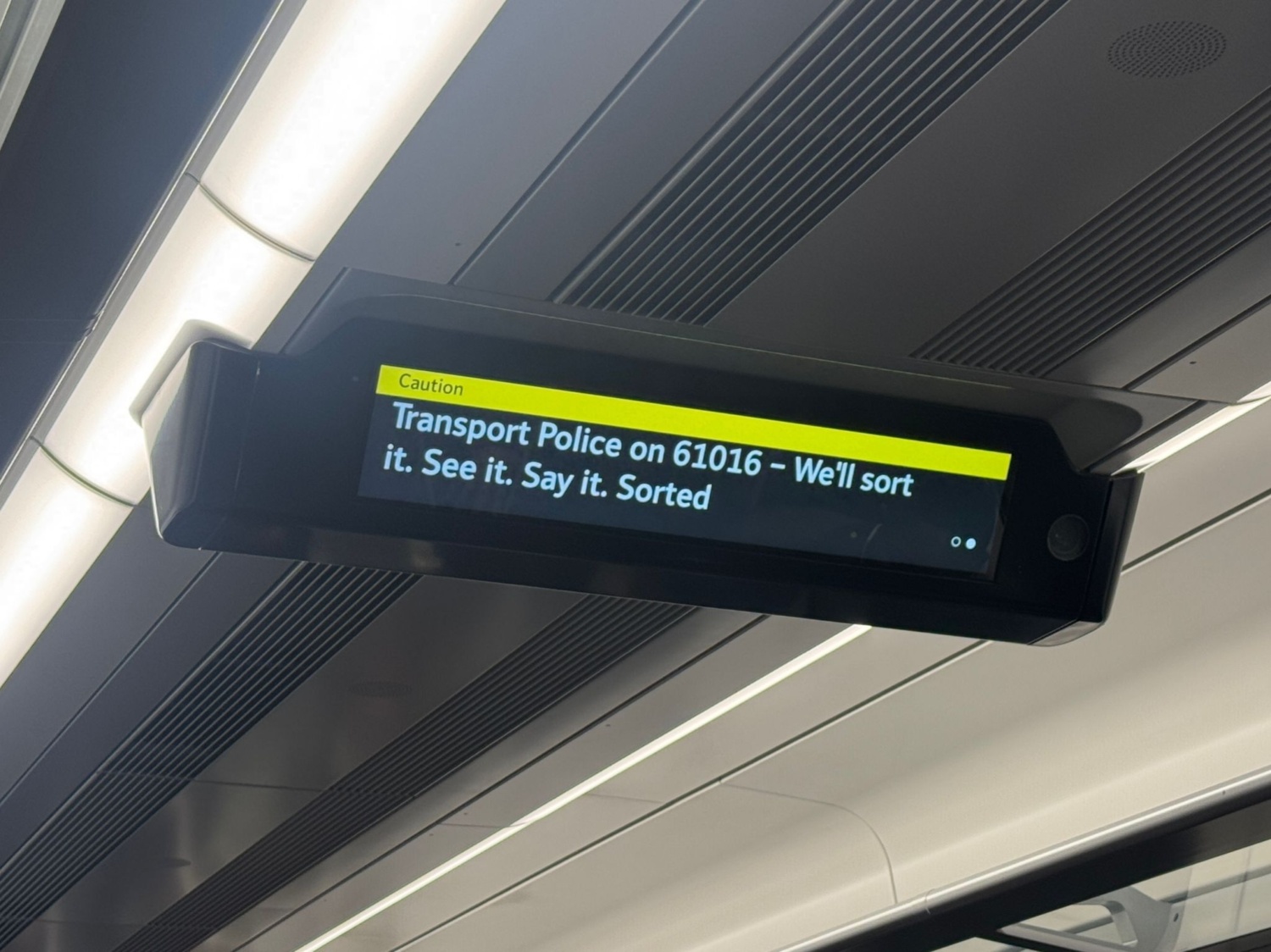
See it. Say it. Sorted…Wait, what was that number again?

David Hall Executive Director
02/04/26
3 minute read
Share
I’ve always found the phrase “See it. Say it. Sorted.” a bit annoying. But I’ve never been able to quite put my finger on why.
As I came up the escalator at Tottenham Court Road the other day and heard it for the billionth time, it finally clicked.
It’s not that I object to the sentiment. In fact, I’d go so far as to say that encouraging people to report suspicious behaviour on public transport seems like a good idea.
It’s more that the phrase itself feels redundant. And it’s not obvious what action it’s trying to get me to take. What’s the point of instructing people to “see” something? Surely they either do or they don’t. Why is “say it” phrased so oddly? It sounds like something from a quiz show. And if you’ve seen it and said it, is it now automatically “sorted”? It gets me quite stressed just thinking about it.
But, I have to admit, the campaign really has endured. So it must be doing something right.
Every train announcement uses exactly the same script. Every poster the same line. In a world where public messaging often changes every few months, the consistency is admirable. Remember how frequently the Covid messaging kept changing?
But for all this consistency and obvious memorability, there is nonetheless an awkward behavioural question.
What exactly is the thing we want people to do? Presumably the intended behaviour is that if you notice something suspicious, you report it to the British Transport Police. Which in practical terms means calling or texting a number. And this is where things start to get fuzzy.
Because while millions of commuters could probably repeat the phrase “See it. Say it. Sorted.”, I suspect far fewer could tell you what number they’re actually supposed to use. To be fair, the campaign has evolved over time, including attempts to make the reporting number more prominent - but this tension remains.
Is it 6016?
Or 6116?
Or something else entirely?
I’ve heard the announcement hundreds of times and I’m still not entirely confident.
Which brings to mind one of my favourite scenes from The IT Crowd, in which the emergency services proudly unveil a new, improved phone number:
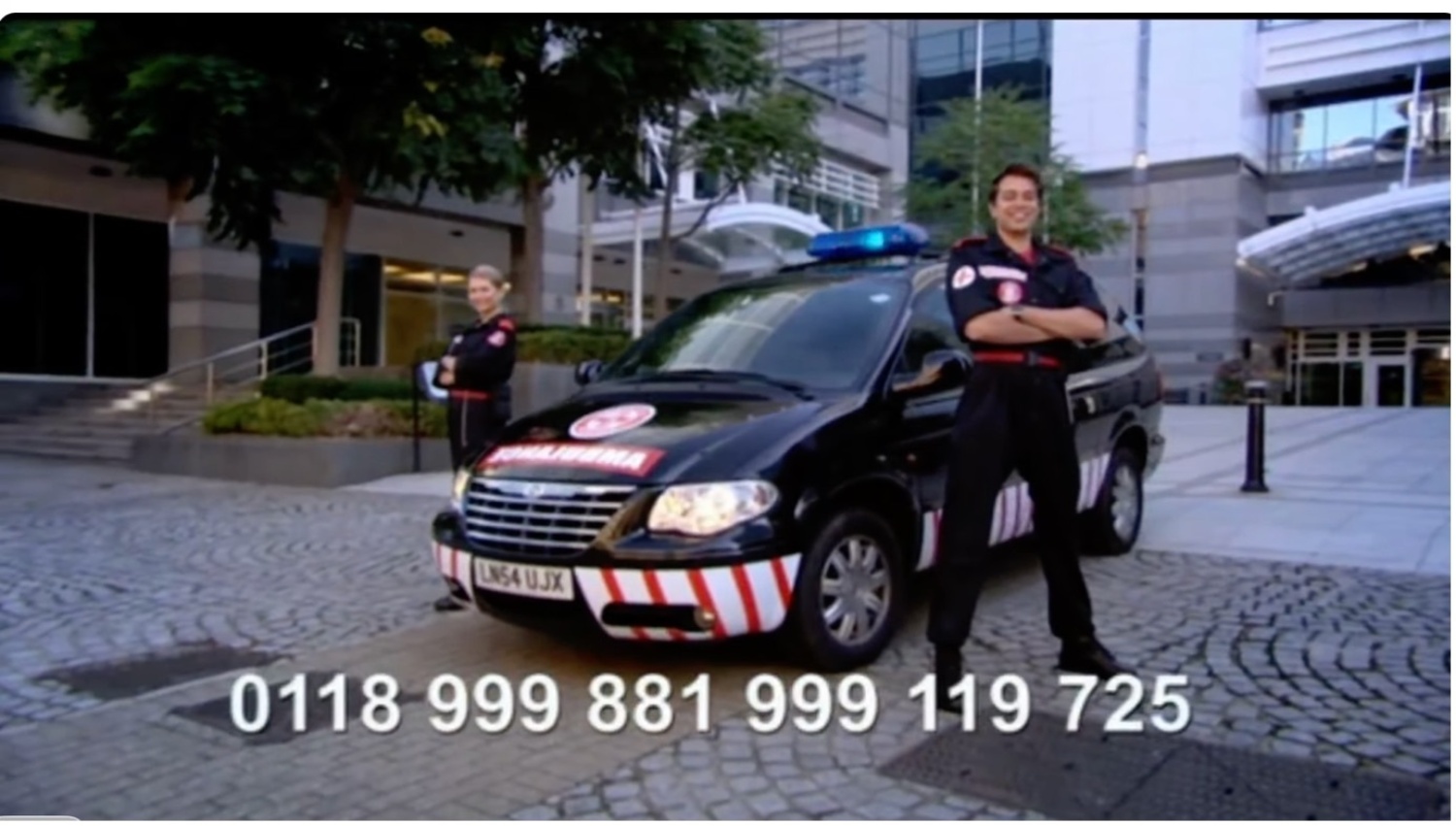
The number which has replaced 999 is 0118 999 881 999 119 725 3. And it is accompanied by a jaunty jingle (written, incidentally, by The Divine Comedy, one of my favourite bands) which somehow manages to make the number even harder to remember, by making the final 3 a sort of afterthought.
The joke, of course, is that the system has completely lost sight of the behaviour it was meant to enable. If people need emergency services, the number should probably be simple enough to recall in an emergency. The sketch exaggerates the problem for comic effect. But it does hint at something real that happens surprisingly often in behaviour change.
Campaigns often optimise for the thing people will remember, when what really matters is the thing people will do.
Memorable slogans are satisfying. They give campaigns a neat sense of identity.
But behaviour change ultimately hinges on something much more prosaic: whether a person, in a specific moment, knows exactly what action to take - and can take it easily.
In that sense, the most important part of the “See it. Say it. Sorted.” campaign may not be the phrase at all; it may simply be the number.
It’s another noughties reference I’m afraid, but does anyone still remember the 118 118 campaign? The one thing that couldn’t possibly be in doubt was exactly what number to call. And on the back of this inescapable clarity, it won an IPA Effectiveness Gold in 2004. This is also an enjoyable watch, although very much of its time.
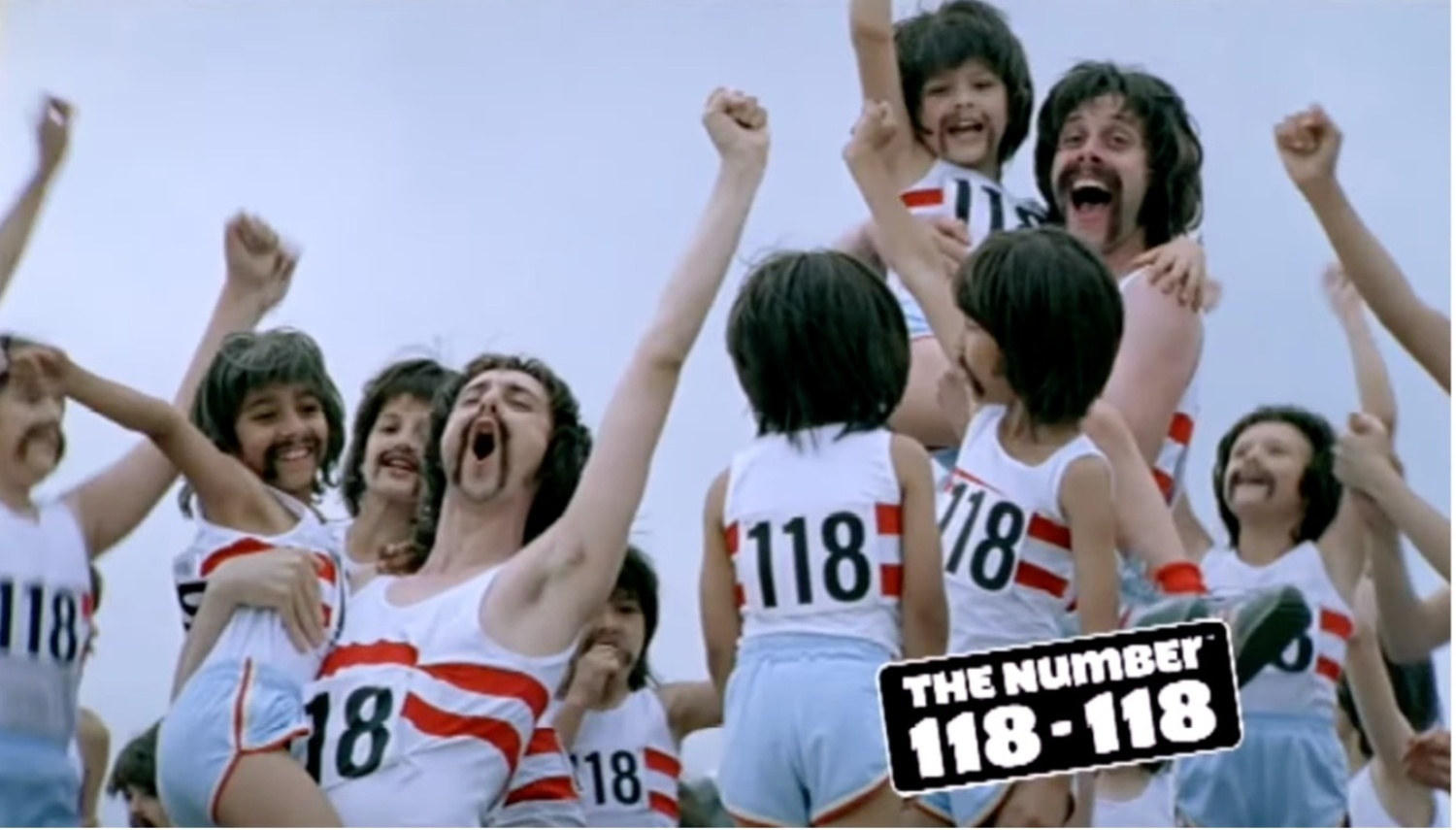
So three cheers for campaigns that put simple, memorable actions at their heart.
And if you have a behavioural problem that needs to be sorted (sorry), what exactly is the thing you want people to do? And are you sure that’s the thing they’ll remember?
Share
RELATED ARTICLES
Sustainability
When is littering not littering?
The 5 types of littering behaviours
08/05/26
Read moreOpinion
It’s a dirty business, but someone’s got to do it
David diagnoses the reality of changing complex behaviours
02/03/26
Read moreBehavioural science
From the Police to Behaviour Change
Anaïs reflects on the importance of considering habits when tackling behaviour change
16/10/25
Read more