IN A NUTSHELL
While most young Londoners say they are concerned about climate change, research shows recycling rates are much lower for this group. This ‘attitude-action’ gap means many young Londoners are living in a state of cognitive dissonance, saying one thing but doing another. This group might be adopting some sustainable actions, but allow recycling to pass them by, even though it is likely to be the most accessible sustainable choice available to them on an everyday basis. We developed ‘Don’t be that person’ with Among Equals to close the gap between intention and action by getting young people to confront this cognitive dissonance. Through digital and out-of-home advertising, our campaign saw a positive impact on recycling behaviours, with 76% of respondents recycling more as a result.
Insight
London has a younger and more transient population than the rest of the UK, and research consistently shows these populations are worse at recycling - from WRAP’s National Recycling Tracker to surveys and ethnographic studies. However, it doesn’t mean they don’t care about the environment. In fact, these audiences are just as likely to be concerned about climate change and environmental issues (82% of Londoners are concerned about climate change[1]), but they are less likely to act on those concerns.
Whilst young Londoners do face additional practical barriers, like space for collecting recycling, or being more time-poor, in-depth research by ReLondon shows a deeper barrier: they simply don’t see themselves as recyclers. For many young Londoners, recycling doesn’t reconcile with their own identities, as it’s typically depicted as a white, middle class, suburban behaviour. This means, while they may identify as climate conscious, they don’t always identify as ‘recyclers’.
Together, this has caused an attitude-action gap for many young Londoners when it comes to recycling.
Intervention
The attitude-action gap can lead to cognitive dissonance - a mental conflict when a person’s behaviour and beliefs do not align. We all desire to be internally consistent, and it causes discomfort when we’re not, leading to people making excuses:
“I don’t have time to recycle”
“Recycling doesn’t work anyway”
Our campaign was designed to bridge the attitude-action gap and make recycling relevant for this audience by:
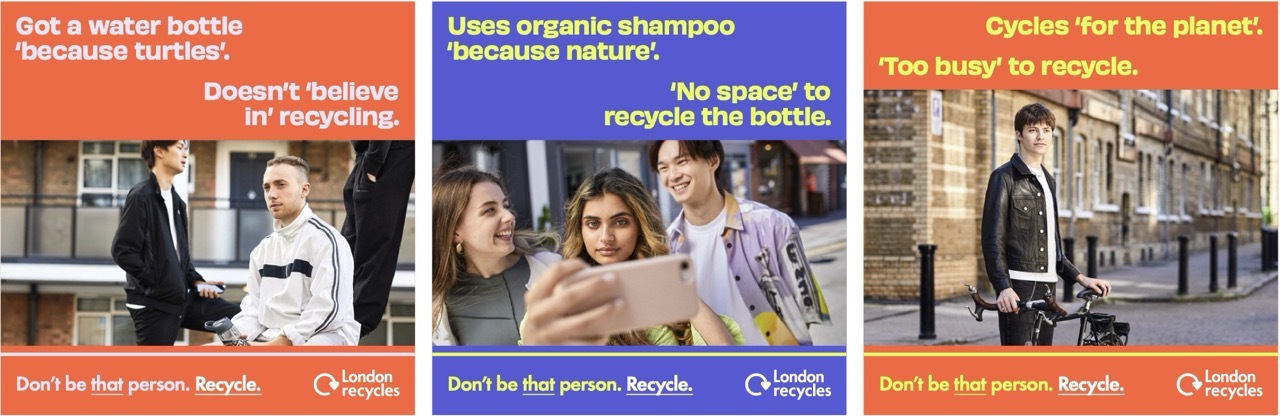
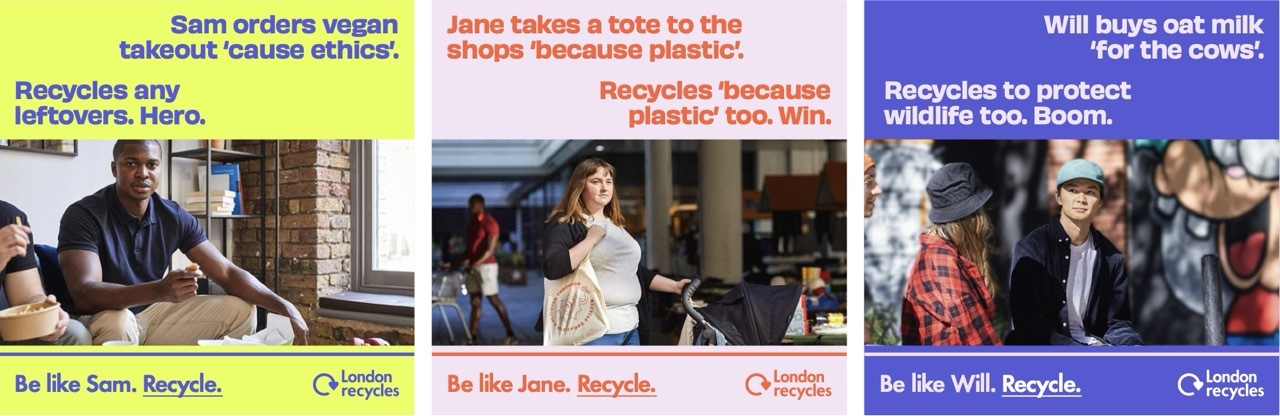
- Confronting people with their cognitive dissonance and explicitly driving them to live their values
- Cementing Londoner’s pro-environmental identity so recycling is just part of who they are
We worked with Among Equals to create comms that modelled the desired behaviour using people, language and ideas the audience identifies with. ‘Don’t be that person’ identified environmental behaviours young Londoners do and highlighted the inconsistencies with doing these and not recycling.
Implementation
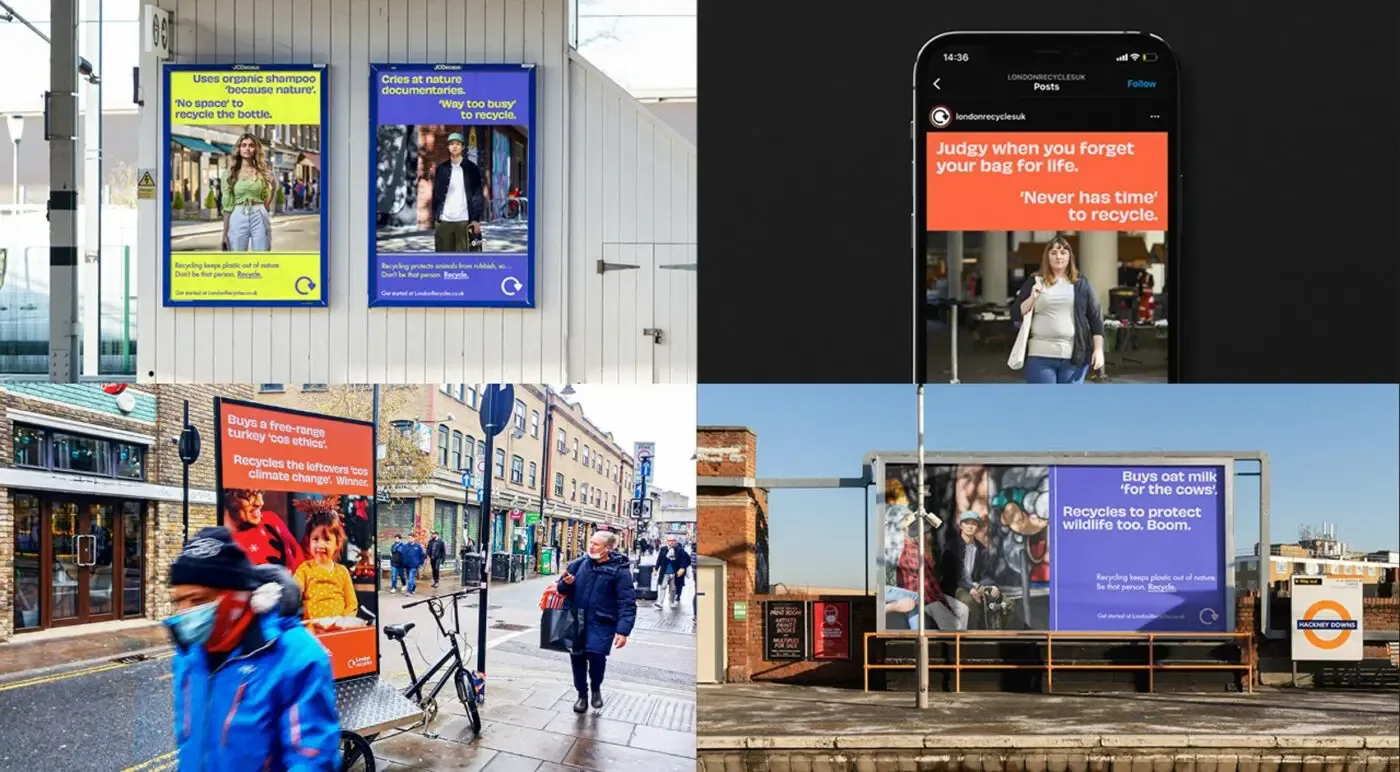
The campaign launched in 2021 with a suite of creative materials for outdoor, print and digital advertising. In its second year, it was updated and adapted for 3 bursts of advertising across 19 London boroughs, selected for their lower recycling rates and higher proportions of younger Londoners - ads ran across Facebook, Instagram, YouTube and physical out-of-home sites including on digital screens in underground stations.
Impact
Survey results indicated a positive impact on recycling behaviours: