In a nutshell
Working with the 50L Home Coalition, we used behavioural science to identify how highly engaged households could build on existing water-saving habits and maximise the benefits of water-efficient technologies.
Background
The 50L Home Coalition is a global collaboration of businesses, researchers and non-profit organisations working towards enabling people to live better using just 50 litres of water per person, per day - around a third of current average water use in the UK. To achieve this, the Coalition combines innovative technologies, water-efficient products and behaviour change to explore how significant reductions in household water use can be achieved without compromising quality of life.
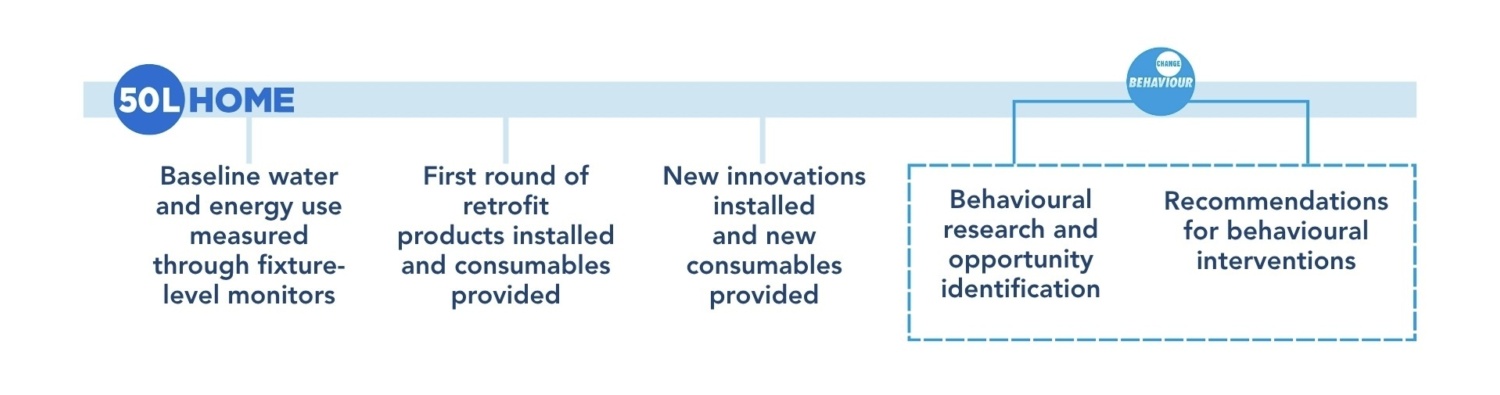
As part of the programme, the Coalition partnered with USGBC California to deliver a pilot with 30 households on the ground in Los Angeles. All homes were fitted with fixture-level water monitors to capture how water was being used, while half also received a range of water-efficient products and appliances. These included water-efficient washing machines, dishwashers and toilets, alongside products designed to encourage more water-efficient routines, such as 2-in-1 shampoo and conditioner; dish detergents (both for automatic dishwashers and hand dishwashing) that let people skip steps like soaking, scrubbing and pre-rinsing dishes; and laundry detergent specifically formulated for superior results even in cold water. This allowed the Coalition to assess the impact these innovations had on household water use.
Behaviour Change joined the project to identify where changes in everyday behaviour could further reduce household water use while maintaining convenience and quality of life. While the monitoring data showed what people were doing, it couldn't explain why. Through behavioural research, we uncovered the habits, routines and decision-making processes shaping household water use, before developing evidence-based recommendations to help the Coalition realise additional water savings.
Insight
We conducted AI-assisted interviews with thirty participants from treatment households to understand the behaviours and routines shaping water use across the kitchen, laundry and bathroom.
The research showed that many households had already adopted more water-efficient behaviours since joining the 50L Home pilot, demonstrating the positive impact the wider programme was already having.
At the same time, our interviews revealed that opportunities still existed to reduce water use further. These weren't about encouraging wholesale behaviour change, but about understanding the small decisions and established routines that continued to shape everyday water use. For example, participants described handwashing particular items, running smaller laundry loads than necessary, or defaulting to familiar appliance settings rather than exploring more efficient alternatives.
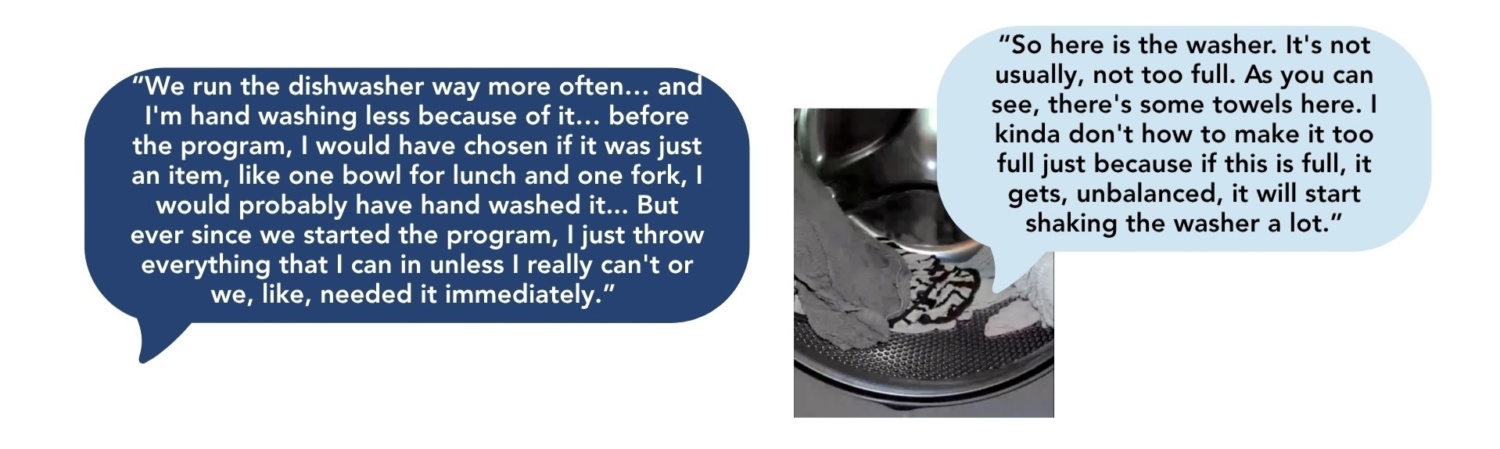
Importantly, these findings came from households that had actively volunteered for a water-saving pilot, were having their water use monitored and were living in a region where water scarcity is a highly visible issue. These households were therefore already highly engaged and motivated to reduce their water use. Rather than trying to persuade people to care more about saving water, our recommendations focused on helping households build on the positive changes they had already made by making water-efficient behaviours easier, more intuitive and better integrated into everyday routines.
From insight to recommendations
Drawing on our research findings, we identified twelve behavioural opportunities where small changes to everyday routines could further reduce household water use without compromising quality of life.
Working collaboratively with coalition partners, we prioritised these opportunities based on their potential impact and feasibility, narrowing the focus to three key opportunity areas where behavioural science could complement the technological innovations already introduced through the 50L Home pilot.
We then translated these priority opportunities into a portfolio of evidence-based recommendations, which focused on making water-efficient behaviours easier and more intuitive by applying behavioural principles such as reducing friction, prompting action at the right moment and designing solutions that fit naturally within existing household routines - for example the rewording of “Dishwasher safe” into “Dishwasher preferred” on dishes.
The final recommendations provided the Coalition with a practical roadmap for future testing, demonstrating how behavioural science could help households build on the positive changes already achieved through the pilot and unlock further water savings alongside technological innovation.