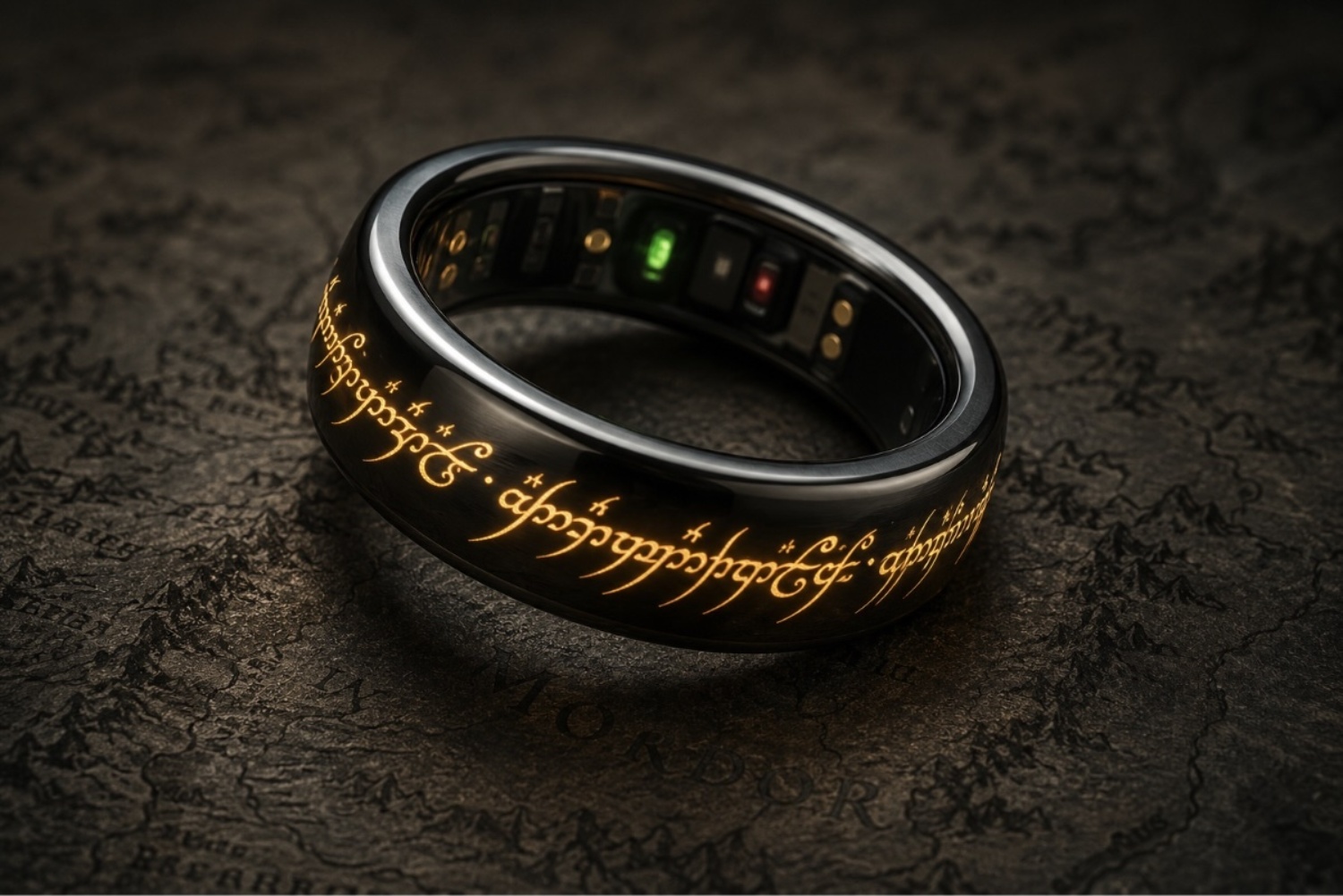
I took my ring off. Here’s what happened next

Rob Moore Operations Director
01/10/26
3 mins
Share
In April 2020, in the thick of the weird early days of lockdown, I bought a ring.
I was living on my own, which meant I was bored and scrolling Instagram a lot, presumably displaying all the characteristics of someone who needed data-driven self improvement. The algorithm found me.
For the next six years, I wore my Oura pretty much every day. I loved it. It became precious to me.
The amount of information something so small can collect is extraordinary. Heart rate. Heart rate variability. Body temperature. Blood oxygen. Movement. Stress. Sleep stages. Sleep quality. Training load. Quite a lot more that I've forgotten.
Every morning I'd open the app and find out how I'd slept and how “ready” the ring thought I was to face the day. Sometimes this confirmed what I already suspected. Sometimes it didn't. And over time I learnt things: a couple of drinks had a surprisingly obvious effect on my sleep, a late meal would make a difference, training too hard showed up in the numbers, so did illness, sometimes before I really knew I was ill. It helped me learn how to live a healthier life.
All of this is a good example of an important tool in behavioural science: feedback.
Feedback helps us connect what we do with what happens as a result. It can make consequences that are distant or difficult to notice much more immediate. It can show progress towards a goal and motivate us to keep going. It's why feedback is everywhere in health and fitness. Strava tells us whether we've run a section faster than last time. Watches tell us to stand up. Apps celebrate streaks. Wearables have taken this even further, quietly gathering information about us 24/7 and turning it into scores, charts and recommendations.
And it can be incredibly effective.
Until, perhaps, it isn't.
This year something changed. I started to resent the ring a bit.
A low readiness score didn't make me think, “That's useful, perhaps I should take it easy today.” It made me think, “Yes I know, get off my back, ring.”
If I'd slept badly, I knew I'd slept badly. If I'd had a stressful day, telling me I had wasn't exactly news. When it gave me a “bad” score, told me my sleep debt was increasing, or my metrics started tumbling, I was getting annoyed with it (yes, with an inanimate object).
The helpful feedback had somehow started to feel like criticism.
Things came to a head before a week when I knew I was going to be busy, stressed and not getting enough sleep. I could already imagine the declining scores and chastising messages waiting for me.
So I did something I’d hardly done in six years. I took the ring off.
I told myself it was just for a couple of days. There wasn't much point measuring something when I already knew what the answer was going to be.
Those days came and went, and the ring still sat on my bedside table. It turned out I actually quite liked not knowing my scores. Or perhaps more accurately, I liked not being told them. There was no sleep debt to repay, no graph heading in the wrong direction, no judgement from the ring on the previous day's decisions.
No longer was I a slave to the data. I was free.
Feedback as a behavioural tool is useful because it helps us learn. It closes the loop between a behaviour and its consequences: I do this, and that happens. Do that often enough and eventually you don't really need the feedback any more. You've learned the lesson.
But there was another possibility that bothered me. Had I learned to understand my body better, or had I actually become a little less good at listening to it? There’s something odd about waking up, knowing you haven't slept particularly well, but checking an app before deciding quite how badly you've slept. Or feeling perfectly fine, only to discover that your readiness score says otherwise. At some point the ring had gone from providing another useful piece of information to becoming an authority on how I felt.
Perhaps that's one of the risks of feedback when it becomes constant. Instead of helping us develop our own judgement, it can start to replace it. We stop using the information to learn and start using it for reassurance, validation or permission. Which raises an interesting question for anyone designing behaviour change interventions. We spend a lot of time thinking about how to give people feedback, but perhaps not enough thinking about when to stop.
The ring eventually made the short journey from my bedside table to the Everything Drawer, where it remains, out of sight, out of mind.
Frodo had to travel all the way to Mount Doom to rid himself of his burden. I just had to walk downstairs.
Share
RELATED ARTICLES
Behavioural science
How hard can it be to get kids to brush their teeth?
Why knowing isn’t doing, and what children’s toothbrushing can teach us about changing behaviour
24/09/26
Read moreOpinion
Friction isn’t necessarily the enemy
Not all friction is bad; the right friction can prevent mistakes and support better behaviours.
06/08/26
Read moreOpinion
Is there more than one way to load a dishwasher?
What a dishwasher, teenagers and behaviour change taught me about adapting this year.
27/07/26
Read more