How hard can it be to get kids to brush their teeth?

Polly Knight Head of Projects
24/09/26
4 minute read
Share
Most parents know their children should brush their teeth twice a day. Most children know they’re supposed to brush their teeth. And yet more than one in five five-year-olds in England have experienced tooth decay, and tooth decay remains the most common reason for hospital admissions among children aged 5 to 9. There are stark inequalities too, with children and young people living in the most deprived communities experiencing rates of hospital tooth extractions due to decay more than three times those in the most affluent communities.
Knowing isn’t doing.
I know first-hand that brushing teeth doesn’t tend to happen in the moment you see a health campaign. It happens at 7:45 in the morning when someone can’t find their PE kit, another child hasn’t eaten their breakfast and everyone needed to leave the house five minutes ago.
Then it happens again at bedtime when parents are tired, children are tired and brushing teeth is one more job standing between everyone and bed.
Ten years ago, I had a three-year-old and a five-year-old at home, so this was very much my reality. It was also something I was thinking about a lot at work.
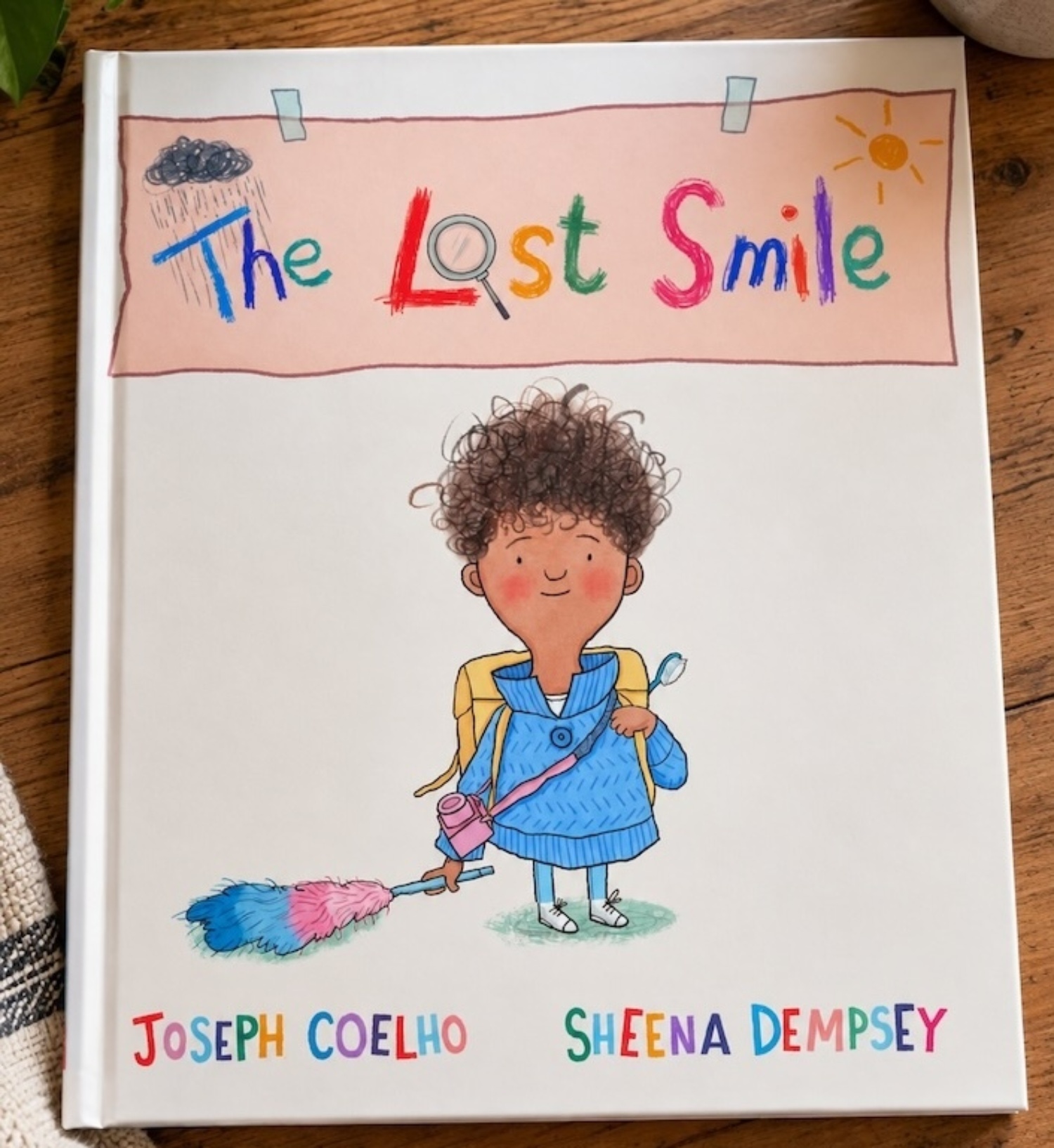
The Lost Smile
At the time, I worked for Wrigley where I led the Wrigley Oral Healthcare Programme, and I was passionate about trying to improve oral health (as I still am). After I presented Wrigley’s oral care strategy to Co-op Food, they asked us to create something that would highlight the oral health credentials of sugar-free gum, while also doing something genuinely useful for the communities in which Co-op operated.
Even then, without the behaviour change knowledge I have now, I knew that simply giving people more information wasn’t going to be enough. So we developed Brush Up on Smiles, an oral health education programme sent to more than 3,000 primary schools in areas particularly affected by childhood tooth decay.
It included assemblies, lesson plans and crucially a specially commissioned children’s book: The Lost Smile.
Research Wrigley commissioned at the time had looked at what made children smile. Being read a bedtime story was in the top three, alongside pulling silly faces and playing hide and seek. So we took something children already enjoyed – stories – and used it to engage them with something they were perhaps rather less enthusiastic about: looking after their teeth.
The Lost Smile told the story of a little boy whose family had mysteriously lost their smiles and his mission to find them again.
Looking back, it was one of the most behaviourally interesting parts of the programme. Rather than asking children to become interested in oral health, we took oral health into something they were already interested in.
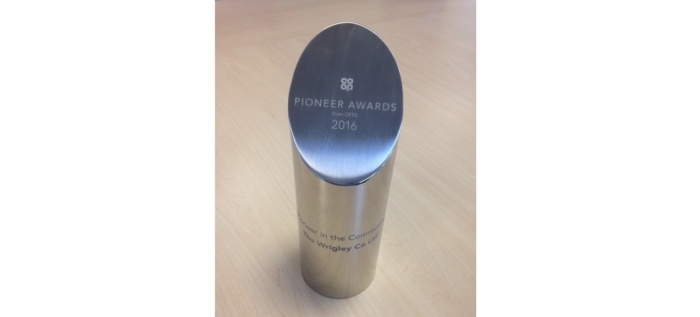
The programme ultimately reached at least 100,000 children and, ten years ago this week, won Wrigley the Co-op Pioneer in the Community Award for its work to improve the oral health of disadvantaged communities across the UK.
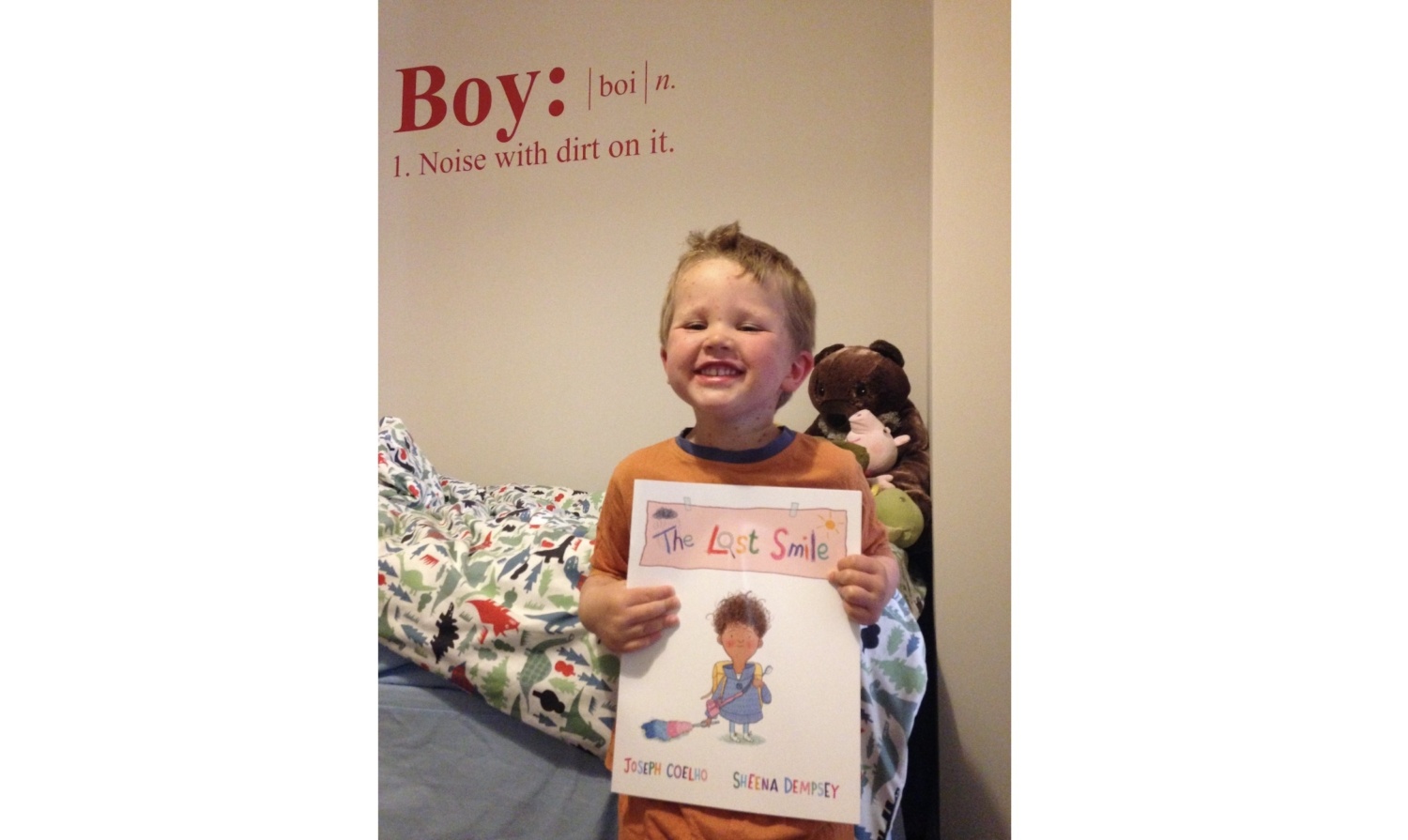
The photo above is my then-three-year-old son, proudly holding our copy of The Lost Smile. Despite having a bad case of chicken pox, he was smiling because he knew how much it meant to mummy to finally have a copy of the book she’d ‘helped to make’.
What would I do differently now?
At the time, I probably would have described what we were doing as oral health education. Today, I’d look at it slightly differently. Education was certainly part of it, but I can see elements of what I now recognise as behaviour change too. We weren’t just giving children information. We were trying to engage them through stories, reach them through schools and communities, and make oral health relevant to their everyday lives.
Ultimately, the behaviour we wanted to influence was incredibly simple:
Brush your teeth. Twice a day.
Once you define the challenge as a behaviour rather than an education problem, it changes the questions you ask. Rather than just asking whether children and parents understand why brushing matters, I’d want to understand what happens at the moment they’re supposed to do it.
What else is competing for their attention? Who initiates it? Is it part of an established routine? Does the child resist? Is everything they need easily available? And what reward is there for doing it today, rather than the fairly abstract prospect of avoiding tooth decay in the future?
Because telling people what to do is unlikely to be the answer. We need to understand the environment in which that behaviour happens.
And that’s what makes the Government’s current rollout of supervised toothbrushing for three-to-five-year-olds in nurseries and primary schools in more deprived areas so interesting. It changes the environment. It builds brushing into an existing routine. Children do it alongside other children. Repetition creates an opportunity for the behaviour to become familiar and normal.
But there’s still another challenge: what happens when they go home?
Ultimately, we don’t just want a child who brushes their teeth at nursery. We want a child who brushes at home, at weekends, during the school holidays and, eventually, without an adult reminding them.
So perhaps the challenge isn’t simply “How do we get children to brush their teeth?”, instead it’s “How do we create the conditions in which brushing your teeth becomes just something you do?”
That might mean attaching brushing to an existing routine, creating prompts at the right moment, giving children ownership, making it more enjoyable or simply reducing the friction for parents.
An intervention can create a behaviour. The harder challenge is making it stick.
Ten years on
I still have my copy of The Lost Smile. I also have great memories of going on stage with my colleagues to collect the Co-op award – followed by a brilliant performance from surprise guests The Kaiser Chiefs!
But what interests me most looking back isn’t the award. It’s how differently I’d approach the same challenge now.
I’d still care about what children know. But I’d spend much more time understanding those few minutes before the toothbrush comes out…or doesn’t.
Whether we’re talking about brushing teeth, recycling, saving water, being more active or any of the other behaviours I’ve worked on since, the same lesson keeps coming back:
The gap between knowing and doing is where things get interesting.
The little boy in that photo doesn’t need me to brush his teeth anymore (though I do still have to give him the odd reminder to do it himself!). But the work behind The Lost Smile has stuck with me. If people already know what we want them to do, perhaps we need to stop telling them – and start understanding what’s getting in their way.
Share
RELATED ARTICLES
Opinion
Friction isn’t necessarily the enemy
Not all friction is bad; the right friction can prevent mistakes and support better behaviours.
06/08/26
Read moreOpinion
Is there more than one way to load a dishwasher?
What a dishwasher, teenagers and behaviour change taught me about adapting this year.
27/07/26
Read moreBehavioural science
From intention to action: we’ve known the problem for years. So why hasn’t it been solved?
Find out what David will be discussing at Reset Connect
15/05/26
Read more