The man with the wrong scales

David Hall Executive Director
28/10/26
3 mins
Share
Last week I bought a new set of bathroom scales.
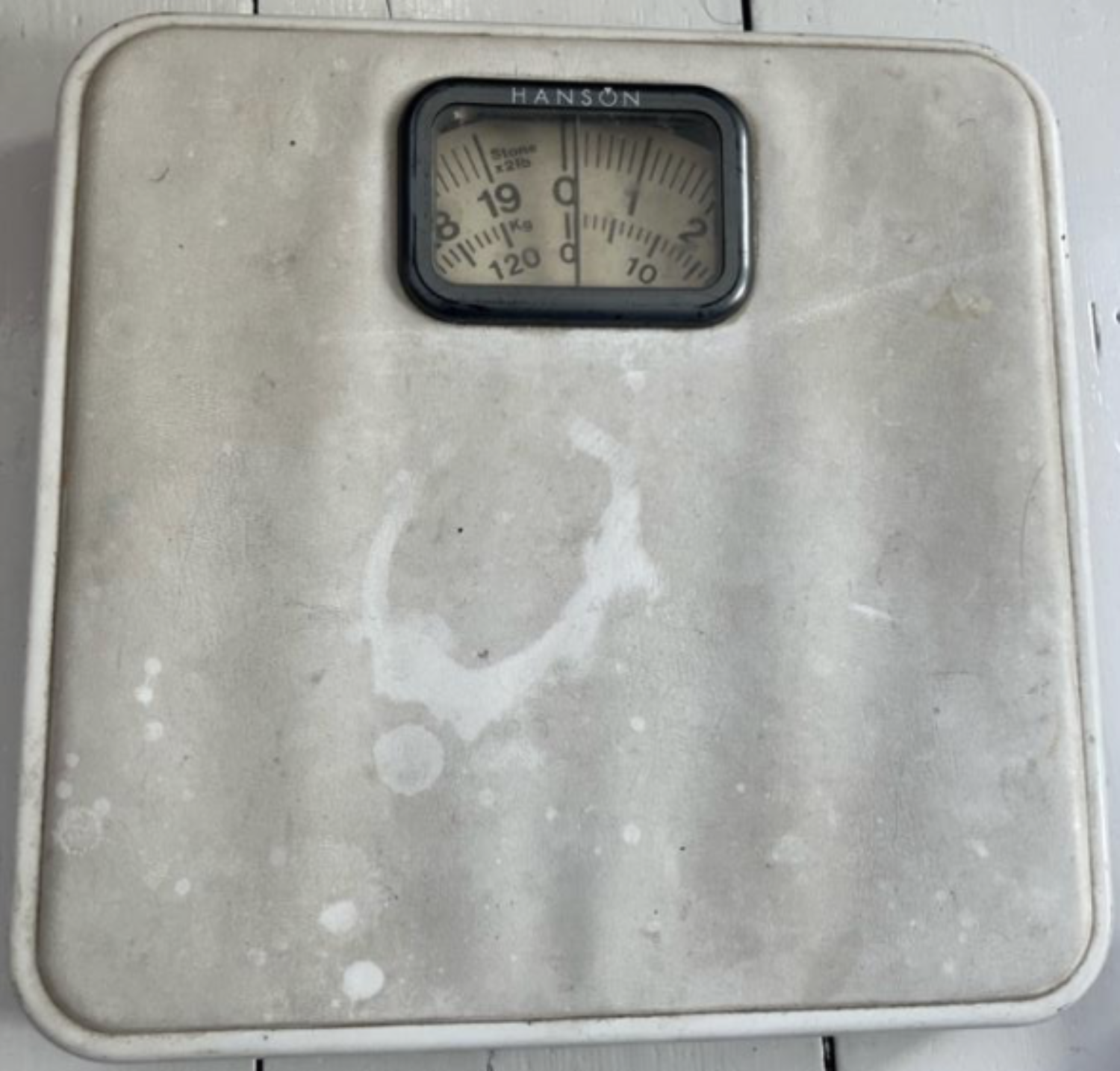
This would not normally qualify as a major life event. But my fancy new (Bluetooth, believe it or not) scales replaced these vintage ones which I'd owned for around 35 years:
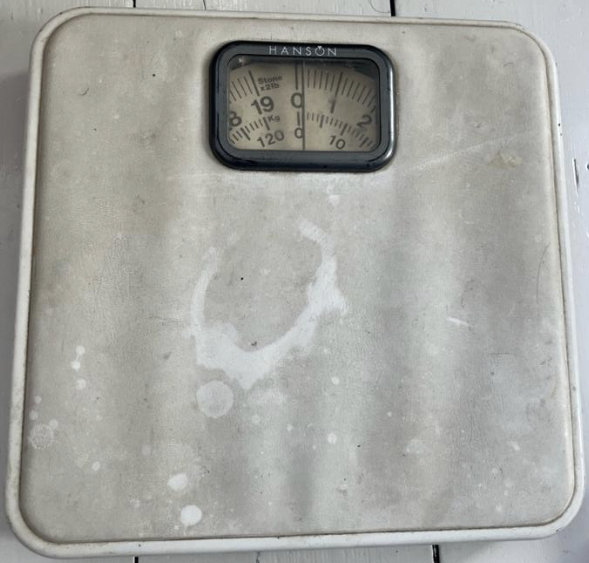
The old scales had become increasingly inaccurate. In fact, "inaccurate" is probably too generous. They consistently under-reported my weight by several kilogrammes.
I discovered the existence of this rather fundamental fault some years back, and yet I never replaced them.
Why? Well, because they told me I weighed less than I actually did.
I understood that this made them completely useless as a measurement device. But somehow that same flaw also made them strangely attractive. They offered a slightly more flattering version of reality.
The moment I unpacked the new scales, my weight immediately increased and at last I knew the rather alarming truth about how much I really weighed.
It's a tiny example, but it captures something important about human behaviour. Despite evidence to the contrary, we like to imagine that people make decisions rationally, weighing up evidence and acting in their own best interests. In practice, we're all a bit more complicated than that.
Take a walk down any road and you'll see evidence of society's attempts to influence behaviour through nice, simple, rational planning. Single yellow lines. Double yellow lines. Zig-zag markings. Speed limits. Warning signs. Parking notices.
All these interventions were carefully designed, because road safety matters. And, having studied the Highway Code, all drivers should have a pretty good idea of what they mean. Yet what's striking is how often they get ignored.
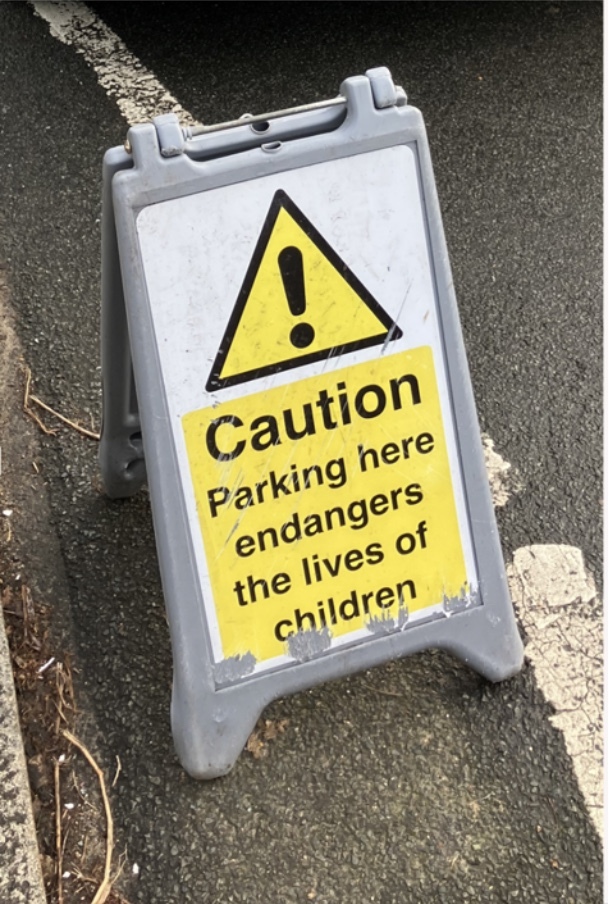
At my daughter’s school, they’ve tried their hand at an additional behavioural intervention to deter drivers from parking next to the zebra crossing. Knowing that rational communication can be ignored, they’ve leaned in to an emotional trigger instead. The sign they put out every morning is bright, noticeable, in exactly the right spot and carries a pretty hard-hitting message:
And yet, almost every day I see something like this:
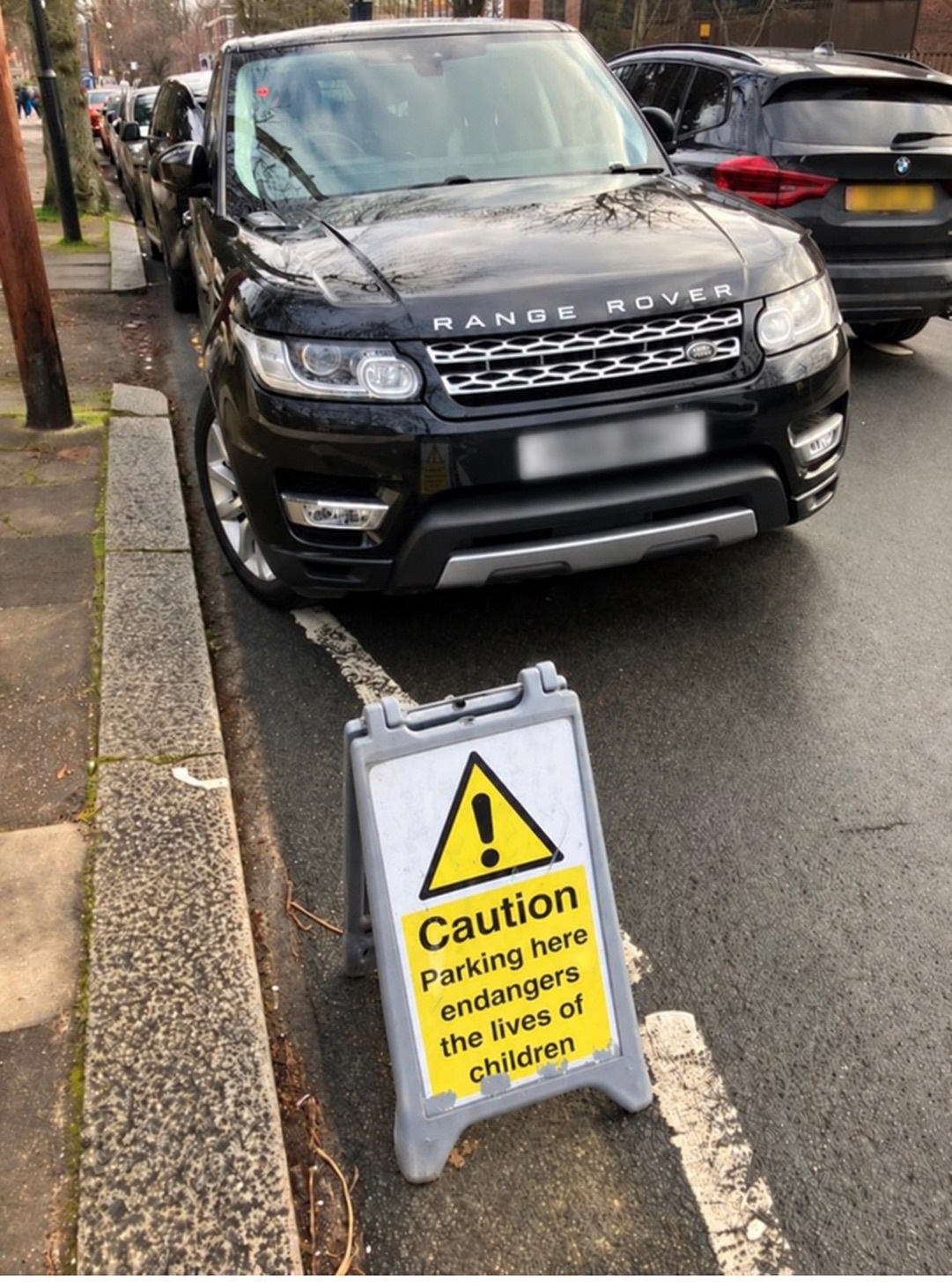
I don’t think this is because the parents are bad people. Or because they disagree with the principle behind the sign.
More likely it’s because they are in a hurry, copying what everyone else is doing, or dealing with a dozen competing priorities. They just want to drop their kids and get on with their day and their own personal feelings in that moment outweigh any moral pressure the sign exerts.
The irony, of course, is that the driver parked on the zig-zags may well have replaced their bathroom scales years ago. They may carefully track their weight, count their steps and never miss a health check. Meanwhile I spent three decades standing on a machine I knew was wrong.
That's the point. Irrationality isn't a personality trait. It isn't something that affects "other people". We all have our blind spots. We all have behaviours that make perfect sense to us in the moment and look completely baffling from the outside.
Behaviour is shaped by far more than information. It is shaped by habits, social norms, emotions, incentives, convenience, infrastructure and the countless small features of the environments around us.
That's why thinking hard about behaviour change is crucial. Not because people are stupid. But because people are human.
When we fail to understand this, we end up creating policies, campaigns and products that assume everyone will behave like a perfectly rational economist. Those interventions almost always disappoint.
When we acknowledge how people actually behave, things get more interesting. We start designing systems that work with human nature rather than against it. We make the desired behaviour easier, more visible, more normal. Yet even then (as with the road sign) it doesn’t always work. So we need to keep testing and keep learning until we hit on an idea that works.
We’ve had more than our fair share of successes when it comes to changing tricky behaviours (from binning gum to parking Lime bikes) and typically our timeline is a bit shorter than 35 years.
So if you have a tricky behavioural challenge you are navigating and you’ve concluded that just giving people the facts is not yet tipping the scales in your favour, come and talk to the man who finally replaced his bathroom scales.
Share
RELATED ARTICLES
Behavioural science
Ideas are not a strategy
Big ideas grab attention, but strategy turns them into lasting change
13/10/26
Read more
I took my ring off. Here’s what happened next
When helpful feedback becomes constant, it can start replacing our judgement
01/10/26
Read moreOpinion
Friction isn’t necessarily the enemy
Not all friction is bad; the right friction can prevent mistakes and support better behaviours.
06/08/26
Read more